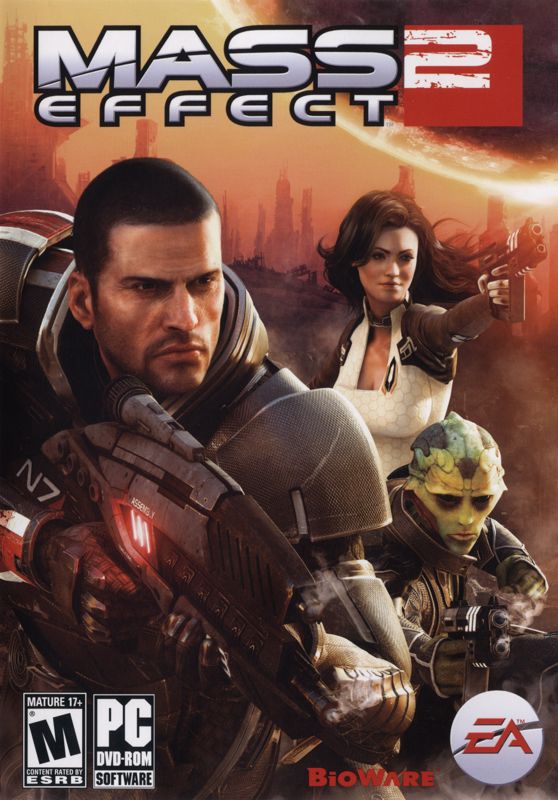
Saren and the Sovereign have been defeated and the Citadel has been saved. Depending on the player's choices made in the first Mass Effect, humanity may be all that's left of the Citadel Council. Of course, that doesn't keep them from ignoring the former war-hero Shepard who knows that the threat from the Reapers is still real. Instead, they send him/her on a boring mission to find some Geth in the Terminus system. The inevitable happens: a new enemy enters the scene, destroys Shepard's ship, the Normandy, and kills the hero of the galaxy. End of game?
No, not really. Cerberus, a known human-centric network, believes the threat from the Reapers to be real and only sees one chance of saving the human race: Shepard. So they invest millions upon millions of credits into the Lazarus Project, and two years after Shepard died floating in space, he/she reawakens on-board the Cerberus Station. The main mission is given by Cerberus: find out more about the mysterious race of Collectors who abduct millions of human colonists for an unknown purpose, and figure out their possible connection to the Reapers.
Mass Effect 2 is a hybrid of third-person-shooter and role-playing game. After the prologue, where the player witnesses the destruction of the original Normandy, he has to create a new character and choose from one of six classes each with its own abilities. The player's choices heavily influence the player's path deciding if he will become a bad or a good person.
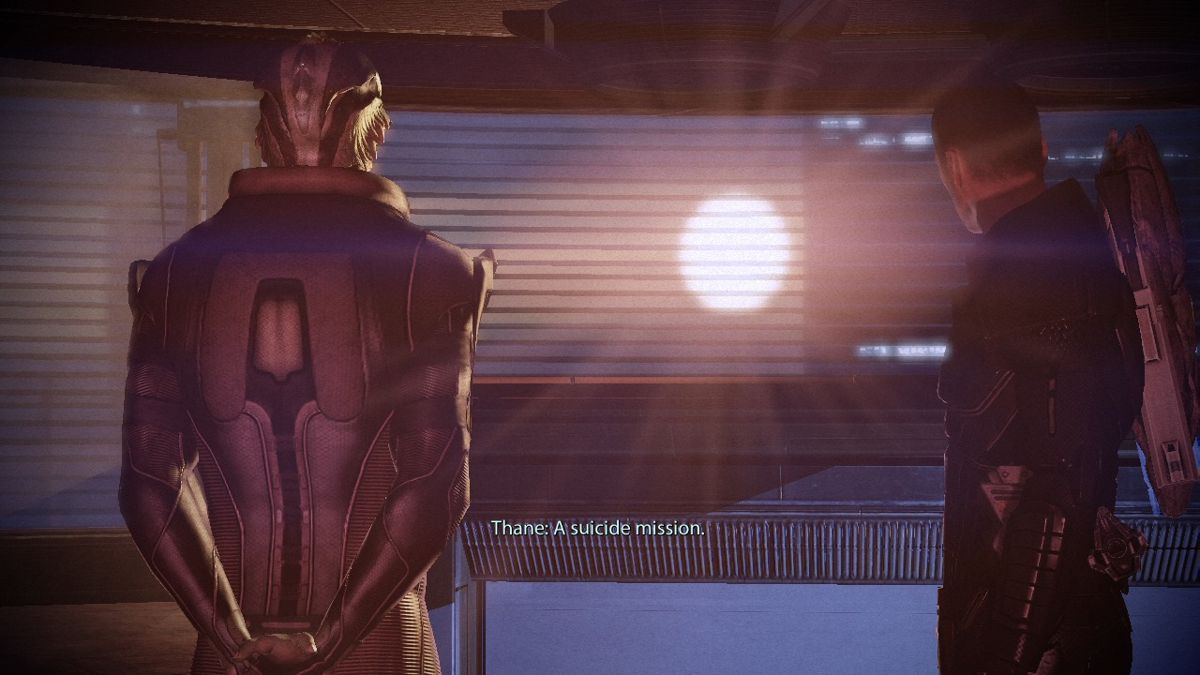
Besides combat, the second most important part of the game are the multiple-choice dialogues. The decisions the player makes here heavily influence the player's path deciding if he will become a bad or a good person. To that end not only the dialogue choices are sorted by good, neutral and bad but special dialogue options are available for each path if the player has enough points in it that can end a dialogue prematurely in the hero's favor.
As opposed to the first game, the PC- and the Xbox-360-versions are nearly identical. The only difference is the interface which, on the Xbox 360, features a radial menu with the ability to put four powers on hot-keys as opposed to the PC-version which features a mouse-controlled drag-&-drop interface and a quick-slot ribbon for up to eight powers to be activated by using the number keys.
One of the most important features of Mass Effect 2 is the ability to import a character from the first game. While the character itself including class and appearance can still be changed at the beginning of the game, he will get a huge bonus both in credits, experience points, and minerals at the start of the game depending on the character level he had at the end. In addition, hundreds of decisions the player made in the first game will have an impact on more or less important parts of Mass Effect 2 .
The game also features quick-time events where the player can perform an alignment action independent from his current path, such as hitting an obnoxious reporter in the face to shut her up. The player can directly use the powers his squadmates possess on both platforms.
In inventory management, the player is only able to change the weapons load-out of his team from the small set he will collect during the course of the game. His squadmates don't have different armor anymore, only the protagonist's appearance can be changed by researching new armor parts and putting them together to a full suit in his cabin aboard the Normandy.
Research is also an important aspect of the game, as the player needs to find or buy the plans for upgrades and has enough minerals. The four types of minerals in the game are either found in chests during a mission or collected through a scanning mini-game on the galaxy map. Side quests can also be found this way and are shown as anomalies on a planet.
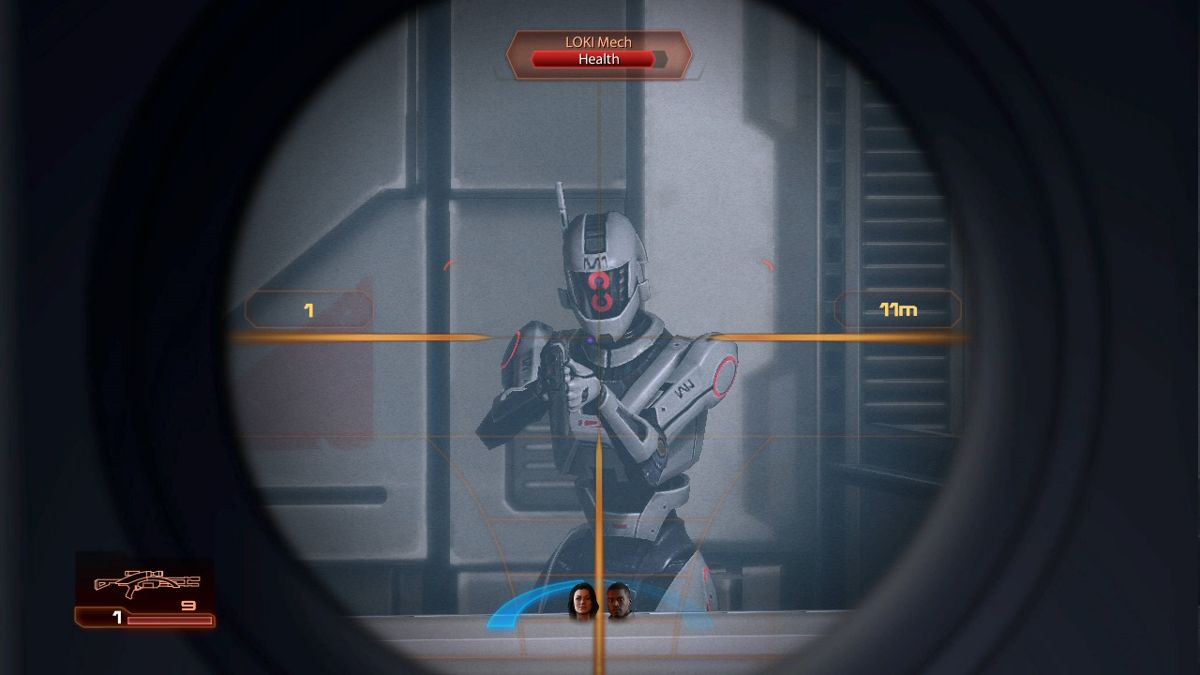
The combat system features heavy weapons like grenade launchers, which come with a very limited supply of ammunition but are very powerful even against full-blown mechs.
 (En,Es) (Disc 1).png)

 (En,Es) (Disc 2).jpg)
 (En,Es) (Disc 1).jpg)