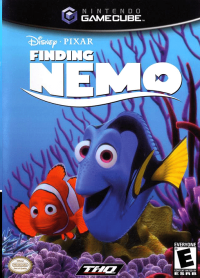
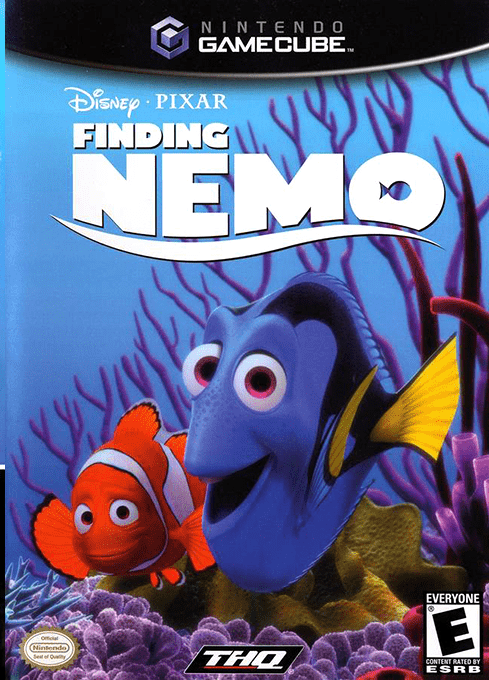
In the 2003 Finding Nemo video game adaptation, the puffer fish character is represented by Bloat, a member of the Tank Gang who can inflate to block paths or assist the player. In Kao the Kangaroo Round 2, puffer fish appear as aquatic hazards that the player must avoid while navigating water levels. Both games utilize the inflating mechanic of the puffer fish as a key gameplay element.
During the sixth generation of video game consoles, the inclusion of puffer fish characters reflected the era's push toward dynamic, physics-based water environments. In
Finding Nemo (2003), developed by Traveller's Tales and published by THQ, the character's implementation relied on the hardware capabilities of the PlayStation 2, Xbox, and GameCube to render real-time scaling and deformation. This release aligned with the massive promotional campaign for the Pixar feature film, translating cinematic character traits into interactive puzzle-solving mechanics.
Meanwhile, the Polish-developed platformer
Kao the Kangaroo Round 2 (2000) utilized these creatures within its proprietary engine to test player reflexes in high-speed aquatic chases and side-scrolling segments. The contrast between the licensed narrative role in the Disney-Pixar property and the purely obstacle-based design in the Kao sequel demonstrates how early 2000s developers repurposed similar marine biology concepts to suit different genres. Today, these representations remain distinct examples of how licensed properties and original mascot platformers of the early 2000s integrated marine life into 3D level design.