In the Wizardry series, including Wizardry I-II-III: Story of Llylgamyn and Wizardry V: Heart of the Maelstrom, Wizards (often Mages) are essential party members who cast powerful offensive and utility spells. In Ultima Runes of Virtue II, wizards appear as magical characters and adversaries that players encounter throughout the quest. These characters typically sacrifice physical defense for high magical capabilities.
In the Super Famicom compilation
Wizardry I-II-III: Story of Llylgamyn, these spellcasters rely on a traditional Vancian magic system, where spells are divided into seven distinct tiers. Players must carefully manage limited spell slots per tier rather than a unified mana pool, making resource management critical during deep dungeon crawls. The 1994 Super NES release of
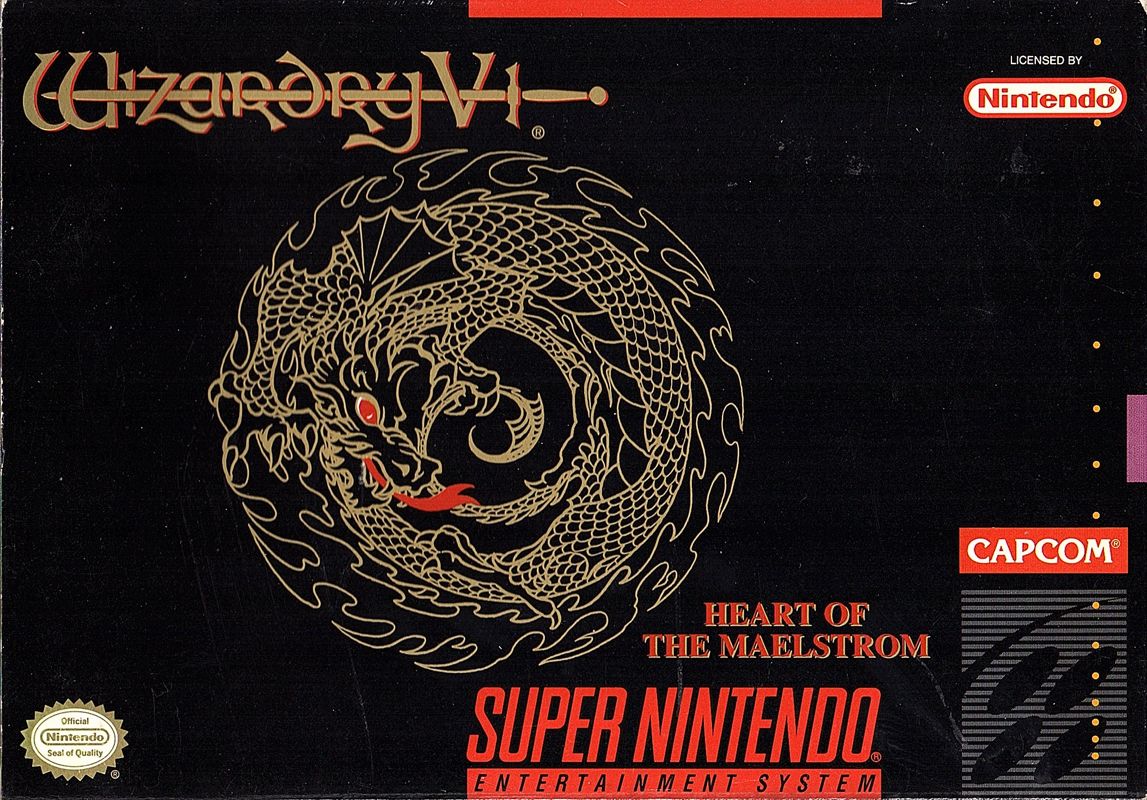
Wizardry V: Heart of the Maelstrom expanded this mechanical framework by introducing environmental interaction spells and specialized combat wards, allowing these characters to manipulate the dungeon grid itself.
Conversely, the action-oriented gameplay of
Ultima: Runes of Virtue II shifts these magic-users into a real-time environment. Whether operating as hostile dungeon denizens or represented by playable companions like Mariah the Mage, these characters utilize staves and magical runes to project ranged energy bolts. This design requires players to actively dodge incoming projectiles, contrasting sharply with the turn-based tactical combat of the mainline
Ultima and
Wizardry computer releases. Together, these titles helped define how early console adaptations translated complex computer role-playing statistics into accessible, screen-based mechanics.

 (Beta) (1993-07-30).png)


 (Beta) (1993-07-30).png)