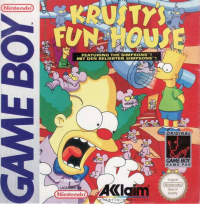
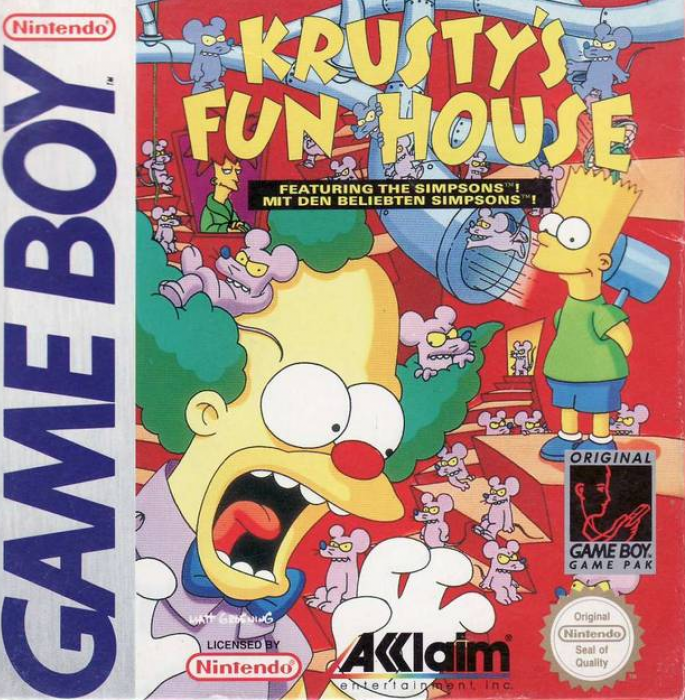
In Krusty's Fun House and Krusty's Super Fun House, blocks are carrying-and-stacking items used by Krusty the Clown to redirect rats toward extermination machines. In Super Mario All-Stars, blocks serve as destructible obstacles, item containers, and platforms across various remastered Mario titles.
In
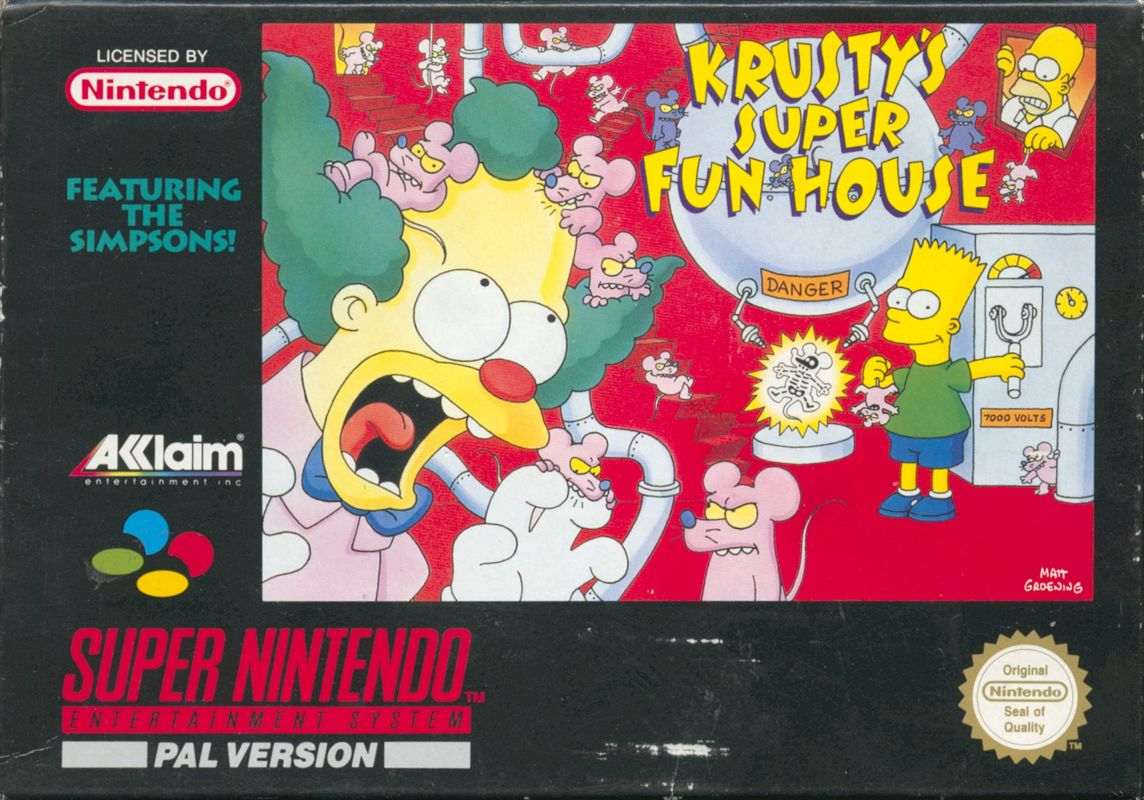
Krusty's Fun House and its Sega Genesis counterpart
Krusty's Super Fun House, these objects represent the core puzzle mechanic designed by software developer Fox Williams. Players must navigate complex, multi-screen grid layouts where block placement requires precise spatial planning, as Krusty cannot jump while carrying them. Depending on the console port—ranging from the 8-bit Nintendo Entertainment System to the 16-bit Super Nintendo—the visual design of these blocks varies from simple pastel crates to detailed, branded toy boxes, reflecting the game's carnival-like aesthetic.
For
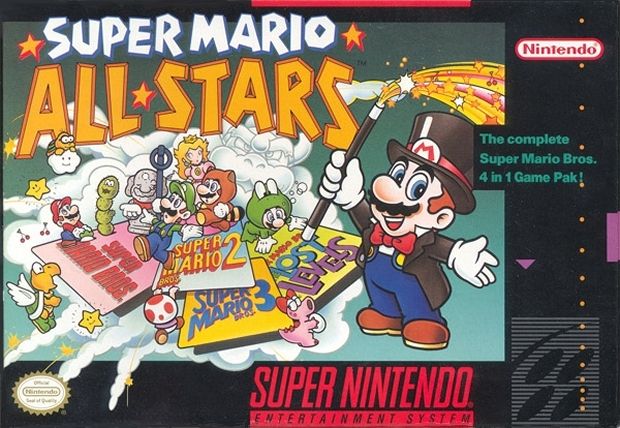
Super Mario All-Stars, the transition to the Super Nintendo hardware allowed Nintendo to standardize the visual language of blocks across four distinct classic titles. The upgrade introduced fluid animations to the iconic Question Mark Blocks and added detailed debris physics when Brick Blocks were shattered. In the remastered
Super Mario Bros. 2 portion of the compilation, the blocks received enhanced shading to emphasize their weight when picked up and thrown at enemies. This release solidified the block as a highly versatile asset, bridging the gap between traditional platforming hazards and interactive puzzle elements within the broader 16-bit era.
.png)





.png)