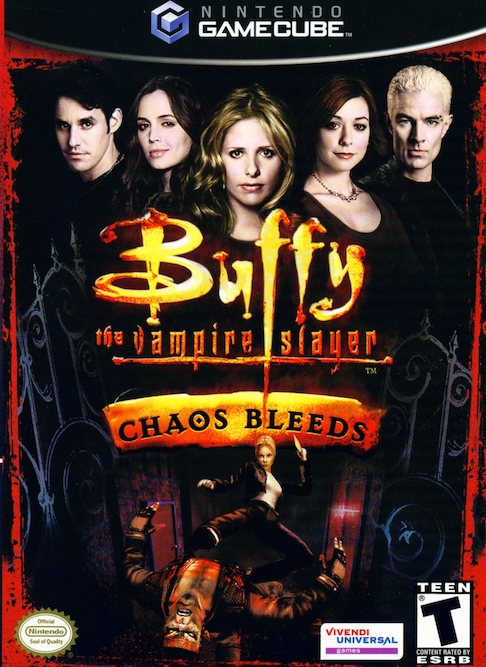
In the kart racer Toy Story Racer, the Slow Motion power-up is an offensive weapon used to decrease the speed of rival racers. In the multiplayer mayhem mode of Buffy the Vampire Slayer: Chaos Bleeds, a similar power-up slows down time for opponents, giving the player a combat advantage.
During the early 2000s, licensed video games frequently incorporated time-altering mechanics to enhance competitive multiplayer modes. In
Toy Story Racer (2001), developed by Traveller's Tales for platforms including the PlayStation and Game Boy Color, this mechanic was integrated into the game's combat-heavy racing system. Players acquired the item from mystery boxes scattered across tracks inspired by the Disney-Pixar film locations, such as Andy's House and the Pizza Planet gallery, adding a layer of strategic disruption to the high-speed circuits.
Two years later, Eurocom implemented a similar temporal mechanic in
Buffy the Vampire Slayer: Chaos Bleeds (2003) for the Xbox, PlayStation 2, and GameCube. Within the game's multiplayer "Mayhem Mode," which allowed up to four players to battle as various heroes and villains from the television series, the item appeared as a glowing magical urn. Collecting this relic triggered a localized temporal distortion, visually represented by a color shift on screen, which left affected opponents vulnerable to physical combos and stake attacks. Both games demonstrate how early 2000s developers adapted standard power-up tropes to fit the specific aesthetic and narrative constraints of major entertainment intellectual properties.