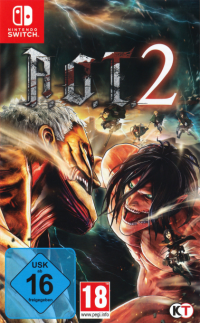
The Attack on Titan video game series, primarily developed by Omega Force and published by Koei Tecmo, includes the 2016 self-titled game (released in Europe as Attack on Titan: Wings of Freedom) and its 2018 sequel, Attack on Titan 2. These games adapt the dark fantasy narrative of the franchise, utilizing the signature Omni-Directional Mobility Gear mechanic for fast-paced tactical battles.
The franchise's presence on interactive platforms expanded significantly with early handheld releases, notably
Attack On Titan: Treasure Box (2013), which offered fans collectible merchandise alongside tactical action gameplay. As the series transitioned to major home consoles, physical collector's editions remained a staple of the release strategy. This was demonstrated by the launch of
Attack on Titan (2016) and its European counterpart,
Attack on Titan: Wings of Freedom [Treasure Box] (2016), which bundled the core game with exclusive artbooks, character pins, and soundtrack CDs.
These adaptations focus heavily on limb-targeting mechanics, requiring players to systematically disable Titan joints before delivering a fatal strike to the nape. Resource management, including monitoring blade wear and gas canister levels, adds tactical depth to the high-speed traversal. The narrative and gameplay systems evolved further with
Attack on Titan 2 (2018). This release introduced a fully customizable player avatar, integrating an original perspective into the established canon. The launch of
Attack on Titan 2 (2018) also featured enhanced multiplayer modes, including cooperative story missions and competitive team battles, cementing the series' transition from single-player narrative experiences to feature-rich action titles.