Originating with Sublogic's Flight Simulator in 1979, this series set the standard for 3D wireframe aviation simulation on early microcomputers. It includes Sublogic's Flight Simulator II (released across various platforms in 1983, 1984, and 1987) and the licensed Microsoft Flight Simulator (1982). These early titles laid the groundwork for one of the longest-running PC simulation franchises in history.
Developed by Bruce Artwick, the franchise began with
Flight Simulator (1979) and
Flight Simulator II [Cartridge] (1979). These releases introduced real-time vector graphics and basic flight physics to home users. The subsequent licensing agreement with IBM led to
Flight Simulator (1982), which became a benchmark for PC compatibility testing due to its intense hardware demands.
Sublogic continued to self-publish on other platforms, releasing
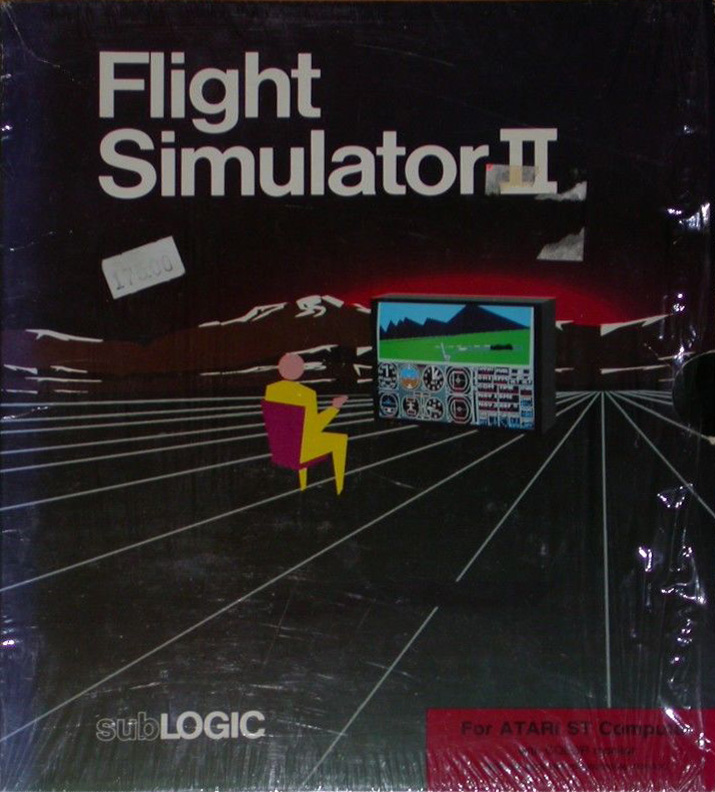
Flight Simulator II (1983), followed by
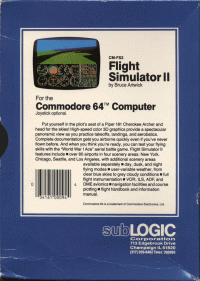
Flight Simulator II (1984) for 8-bit systems. These versions expanded the virtual world, adding detailed instrument panels, multiple airports, and a World War I aerial battle mode. As technology advanced, the series transitioned to 16-bit systems with
Flight Simulator II (1987), alongside
Flight Simulator II [Cartridge] (1987) and another edition of
Flight Simulator II (1987) for console and computer platforms. These iterations introduced filled polygons, replacing wireframe graphics with solid 3D terrain, and established the core mechanics of civilian flight simulation that persisted for decades.
 (v1.1).png)







 (v1.1).png)


.png)

