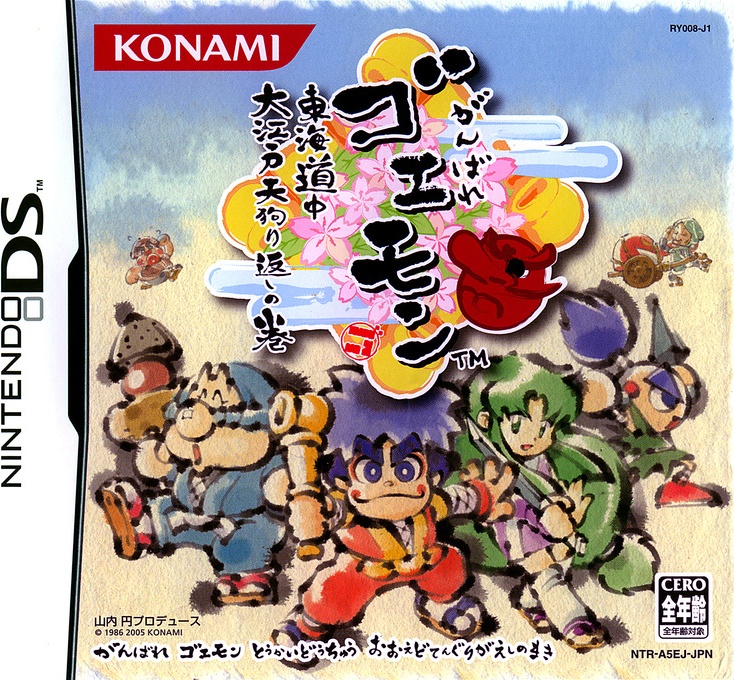
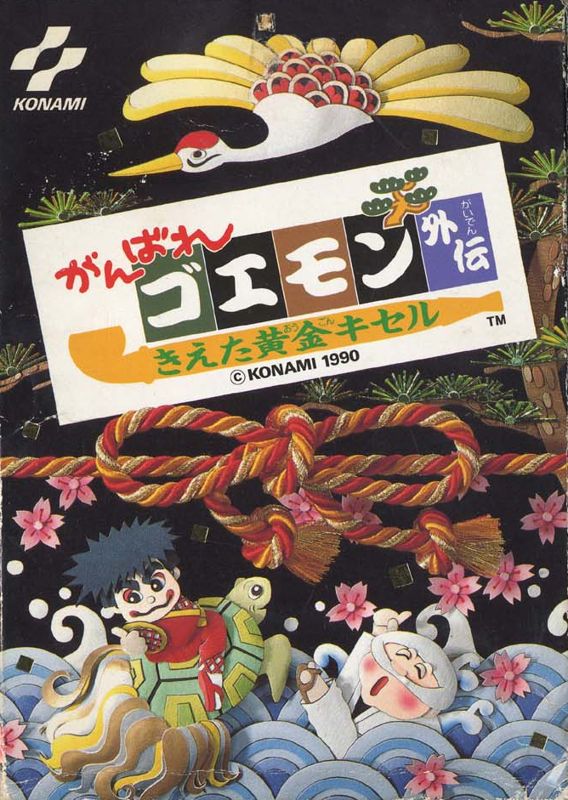
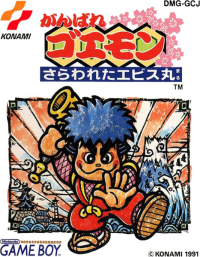
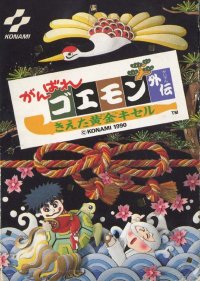
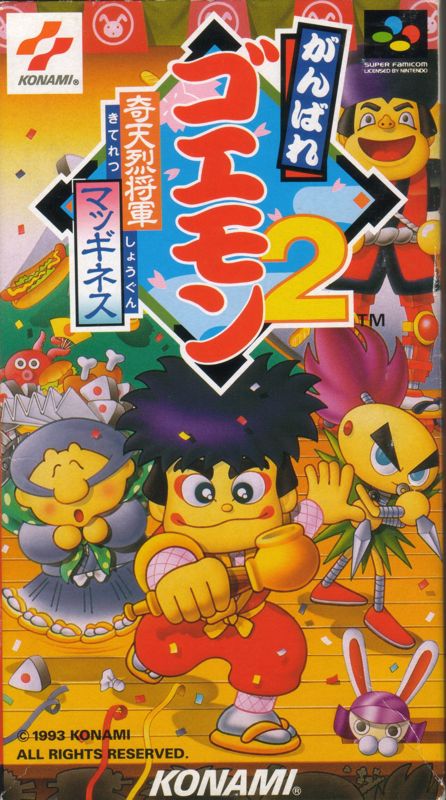
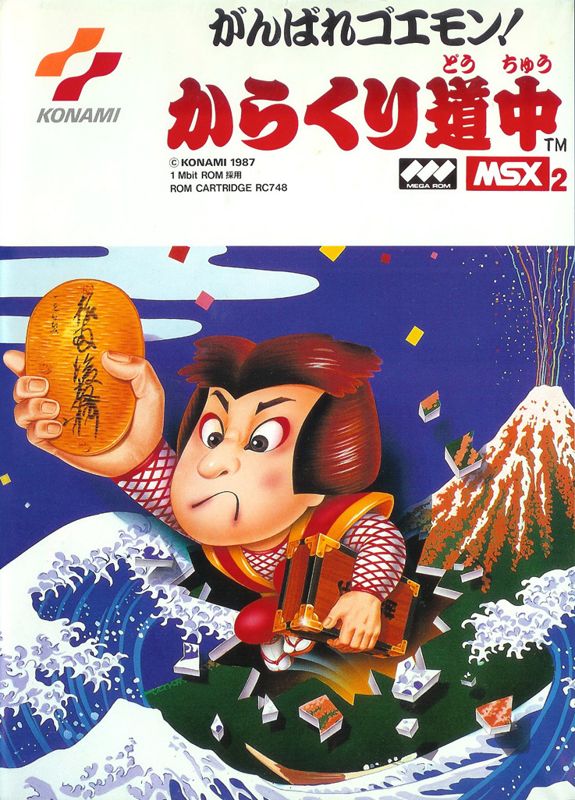
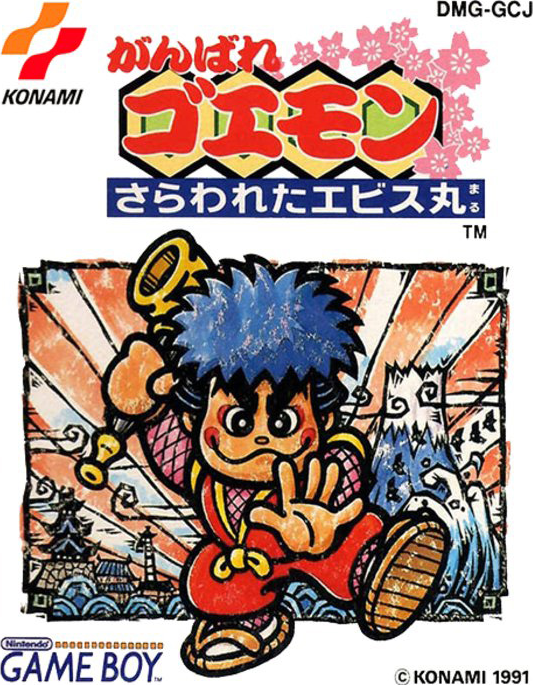
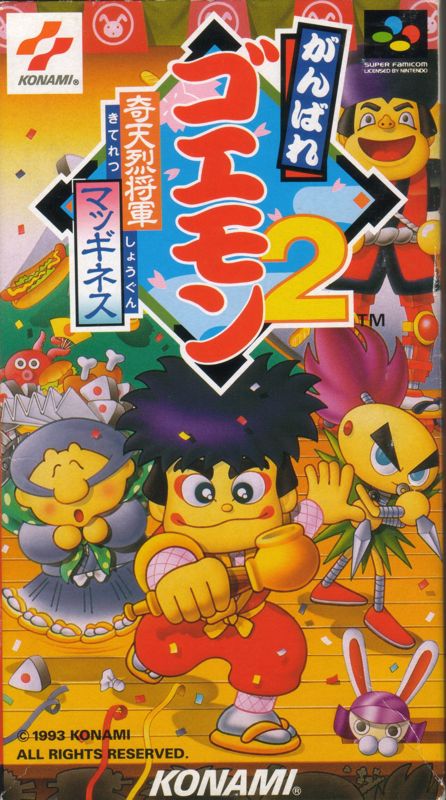
The Ganbare Goemon series, developed by Konami, includes early titles such as Ganbare Goemon (1987) and Ganbare Goemon 2 (1989) for the Famicom. The franchise expanded across platforms with Ganbare Goemon: Sarawareta Ebisumaru (1991) on Game Boy, and Super Famicom releases like Ganbare Goemon 2 (1993) and Ganbare Goemon 3 (1994). These games are characterized by their blend of platforming, action-adventure elements, and humorous takes on Japanese folklore.
Originating from the historical figure Ishikawa Goemon, the franchise evolved from its arcade roots into a staple of home consoles. The dual 1987 releases of
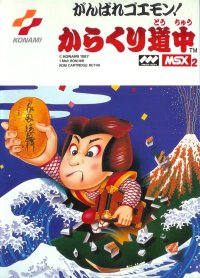
Ganbare Goemon on the Famicom and MSX2 established the core loop of navigating pseudo-3D towns, upgrading equipment, and tackling side-scrolling action stages. With
Ganbare Goemon 2 (1989), the series introduced cooperative multiplayer and Goemon's loyal companion, Ebisumaru.
The franchise achieved international recognition with
Ganbare Goemon (1991) for the Super Famicom, localized in the West as
The Legend of the Mystical Ninja. Concurrently, the series transitioned to handhelds with
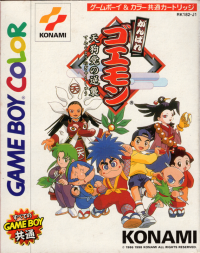
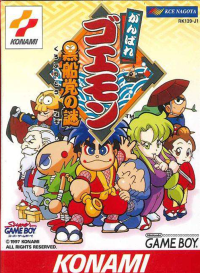
Ganbare Goemon: Sarawareta Ebisumaru (1991). Technical advancements in
Ganbare Goemon 2 (1993) introduced the giant roller-skating robot, Goemon Impact, which became a recurring gameplay mechanic.
Ganbare Goemon 3 (1994) further innovated by shifting to a continuous, interconnected world structure with multiple playable characters. The series entered the 32-bit generation with
Ganbare Goemon: Uchuu Kaizoku Akogingu (1996) on the PlayStation, which utilized pre-rendered sprites and CD audio, solidifying the franchise's legacy of blending historical parody with diverse gameplay styles.

_1.png)






.png)



_1.png)
 (Rev 1).png)




_1.png)
.png)

_1.png)

.png)
.png)
 (Rev 1).png)
_1.png)

_1.png)