The Rolling Thunder series began with Namco's 1986 arcade game (ported in 1988 and 1989), where players control secret agent Albatross to rescue female agent Leila Blitz from the Geldra organization. It was followed by Rolling Thunder 2 in 1991, which introduced cooperative multiplayer, and the Sega Genesis exclusive Rolling Thunder 3 in 1993. The franchise is highly regarded for its tactical cover mechanics, limited ammunition system, and challenging difficulty.
The home conversions of
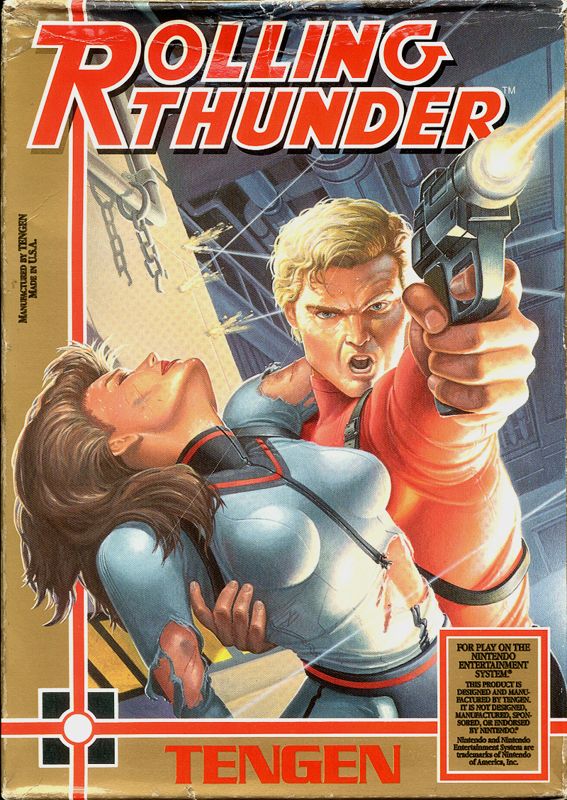
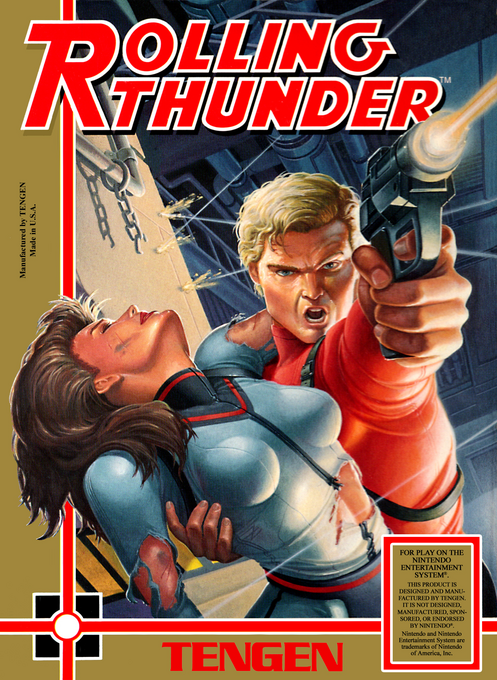
Rolling Thunder (1988) and
Rolling Thunder (1989) expanded the franchise's reach beyond arcades to systems such as the Nintendo Entertainment System, Commodore 64, and ZX Spectrum. These ports adapted the distinct two-tier platform layout where players jump between upper and lower levels to bypass hazards and ambush enemies.
With the release of
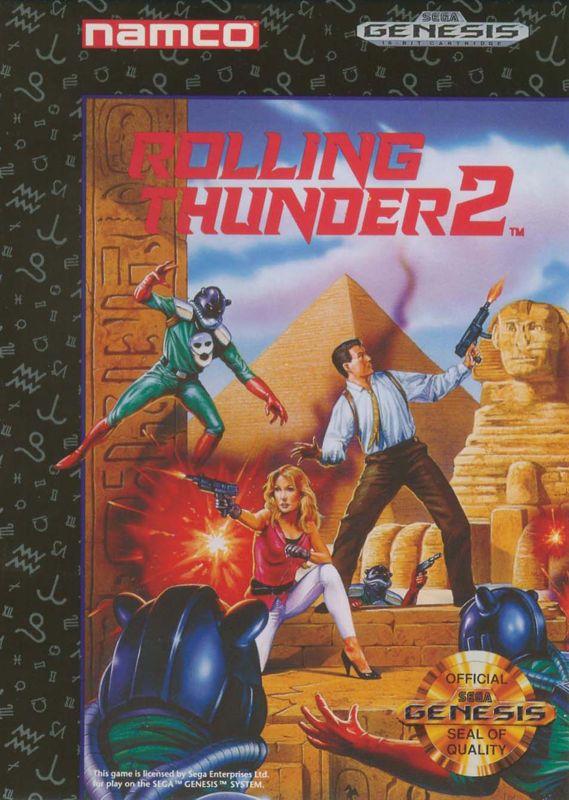
Rolling Thunder 2 (1991) across arcade and home console formats, the series refined its cinematic presentation, utilizing detailed 16-bit sprite art and anime-style cutscenes to advance the narrative. The subsequent release of
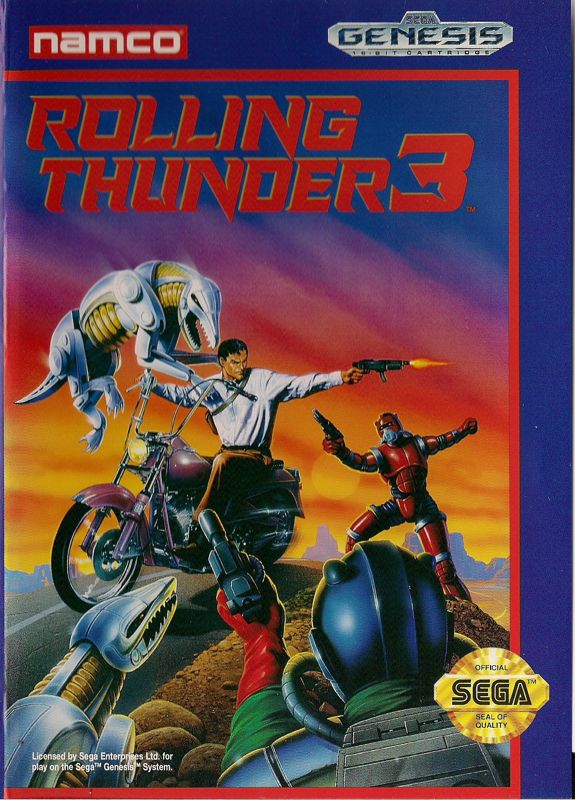
Rolling Thunder 3 (1993) altered the gameplay formula by introducing a new protagonist, Agent Jay, and allowing players to select from an arsenal of special weaponry, including grenades and rocket launchers, before starting each level.
The franchise's design principles heavily influenced Sega's
Shinobi series and other side-scrolling action games of the late 1980s and early 1990s. In later years, Namco preserved the legacy of these titles by including them in various
Namco Museum compilation releases across multiple console generations.




.png)

.png)