The Shinseiki Evangelion video game series began on the Sega Saturn with the self-titled 1996 release and its sequel, Shinseiki Evangelion: 2nd Impression. The franchise expanded with spin-offs like Shinseiki Evangelion: Digital Card Library, the popular visual novel Shinseiki Evangelion: Koutetsu no Girlfriend, and the crossover title Shinseiki Evangelion: Eva to Yukai na Nakamatachi.
Developed primarily for Japanese home consoles and personal computers, these adaptations allowed players to interact with the franchise's psychological themes and pilot the iconic Evangelion units. The initial 1996 release,
Shinseiki Evangelion, utilized first-person tactical battles and interactive video segments. Its follow-up,
Shinseiki Evangelion: 2nd Impression (1997), integrated a school-life simulation and introduced Mayumi Yamagishi, an original character who became central to the game's narrative.
The series frequently experimented with diverse genres.
Shinseiki Evangelion: Digital Card Library (1997) offered a collection of digital memorabilia, trivia, and card-based challenges. Narrative depth expanded with
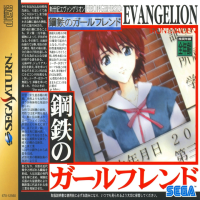
Shinseiki Evangelion: Koutetsu no Girlfriend (1998), which introduced Mana Kirishima and explored alternative romantic paths for protagonist Shinji Ikari. That same year,
Shinseiki Evangelion: Eva to Yukai na Nakamatachi (1998) delivered tactical, grid-based combat by uniting the cast with characters from other Gainax anime productions. The franchise's early era concluded its initial run with
Neon Genesis Evangelion Project-E (2001), which refined the simulation and tactical elements for a new generation of hardware. These titles established a precedent for anime-to-game adaptations by prioritizing character interaction alongside giant robot combat.
_1.png)
.png)
.png)
.png)
_1.png)
_1.png)
.png)
 (Made in USA).png)
_1.png)

_1.png)
.png)

.png)
.png)
_1.png)
.png)

.png)

 (Made in USA).png)
_1.png)
_1.png)
