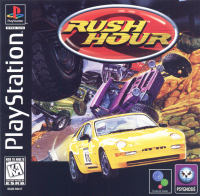
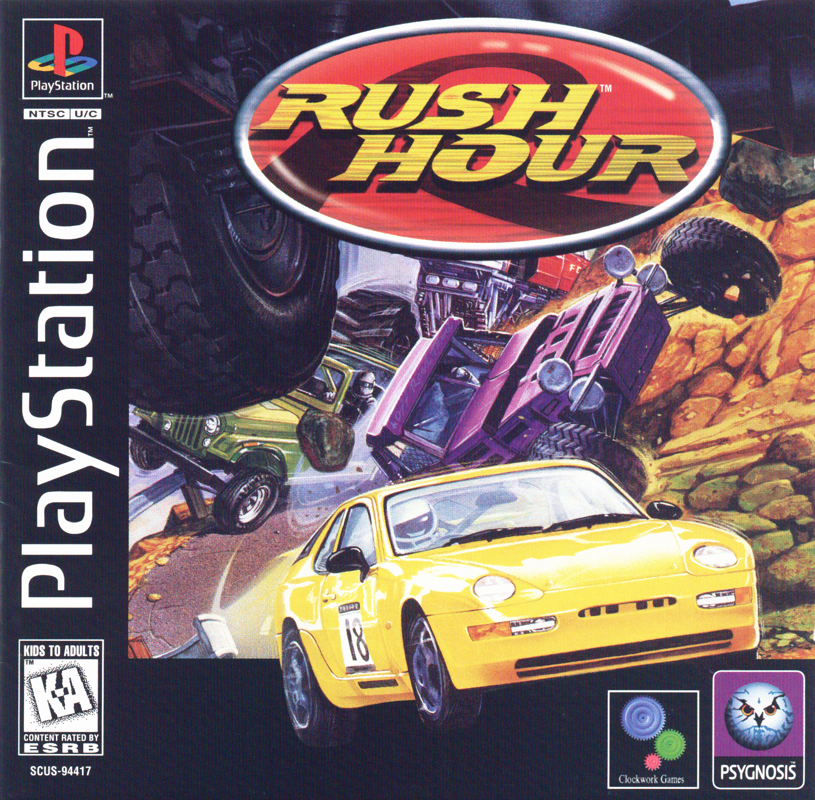
In titles like 3D Stock Car Championship (1988) and Super Stock Car (1990), this entity represents the primary player-controlled vehicle used to compete on paved oval tracks. It also serves as the core racing vehicle in later titles such as Rush Hour (1997), Jarrett & Labonte Stock Car Racing (2000), Stock Car Speedway (2000), and Stock Car Crash (2000).
The mechanical evolution of this vehicle class reflects the technological transition from early computer simulations to fifth-generation console physics. In Zeppelin Games'
3D Stock Car Championship, players had to manage fuel consumption and tire degradation, introducing strategic pit stops to the gameplay loop. Mastertronic's
Super Stock Car shifted the perspective to a top-down view, emphasizing tight cornering and collision avoidance against aggressive AI opponents.
With the advent of 3D graphics,
Rush Hour expanded the vehicle's capabilities by incorporating arcade-style physics and visible cosmetic damage. Codemasters further refined this in
Jarrett & Labonte Stock Car Racing, where the vehicle received highly detailed simulation mechanics, allowing players to customize individual components such as gear ratios, tire compounds, and suspension stiffness to suit different tracks. In contrast, releases like
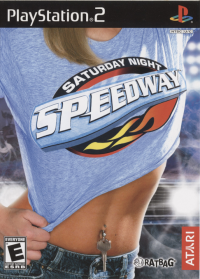
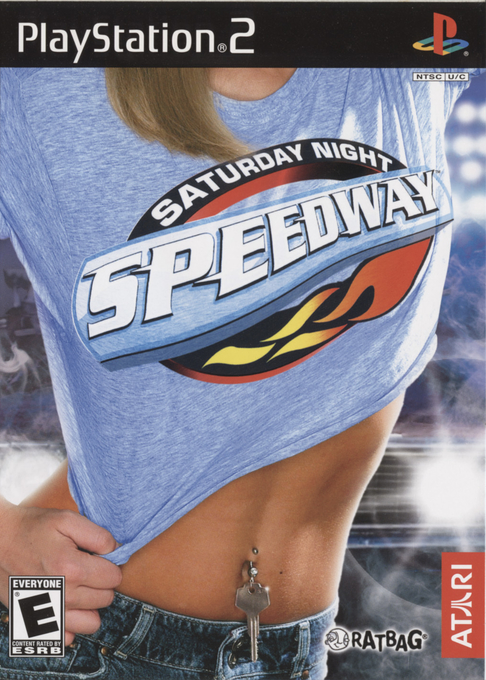
Stock Car Speedway and
Stock Car Crash prioritized high-speed impacts and structural deformation, turning the vehicle into a tool for demolition-style survival. Across these diverse titles, the vehicle's handling characteristics evolved from rigid, grid-based movement to complex, physics-driven simulations.


.png)

_1.png)
.png)

(Firebird Software).jpg)
.png)
.png)
_1.png)
.png)
(Firebird Software).jpg)
.png)