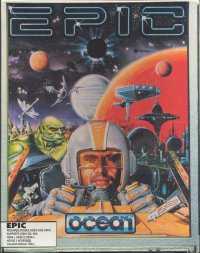
Digital Image Design Ltd. (DID) established its reputation for advanced 3D graphics technology with the space combat game Epic in 1992. The developer applied its proprietary 3D engine to the ambitious multi-genre adaptation of Robocop 3 in 1993, which featured real-time 3D driving and flight segments. The studio's early technical expertise also contributed to the Amiga and Atari ST versions of the original RoboCop in 1989.
Founded in Macclesfield, Cheshire, by Martin Kenwright and Philip S. Tudor, the studio leveraged its relationship with publisher Ocean Software to secure high-profile projects. Following their work on the
RoboCop conversion, the developers focused on pushing the boundaries of 16-bit hardware. This technical drive culminated in
Epic, which drew heavy thematic inspiration from science fiction franchises like Battlestar Galactica and featured a cinematic narrative structure rare for the era. The game's success spawned a 1994 sequel,
Inferno, which further refined their rendering techniques.
For
Robocop 3, the team departed from the traditional side-scrolling action of the previous franchise entries, opting instead for an immersive, interconnected polygon world. This release featured a groundbreaking "Movie" mode, allowing players to experience a structured narrative or edit their own action sequences. The sophisticated flight and physics calculations designed for these titles directly enabled the studio's transition into highly realistic military flight simulations. This expertise led to acclaimed simulation titles such as
TFX and
EF2000, cementing the developer's legacy as a pioneer in PC flight simulation before the studio's eventual acquisition and closure.
.png)
.png)
 (Budget - The Hit Squad).png)

.png)

.png)
 (Budget - The Hit Squad).png)