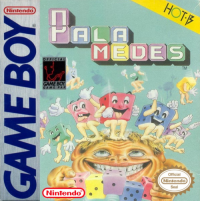
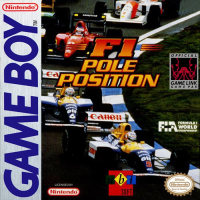
Natsu System developed several notable handheld and console games, including the puzzle game Palamedes and the historical simulation Sekigahara. They were heavily involved in handheld racing games, developing Nakajima Satoru F-1 Hero GB: World Championship '91 and Nakajima Satoru Kanshu F-1 Hero GB '92, which were localized internationally under the F1 Pole Position franchise. They also developed the Japan-exclusive Game Boy title Wally wo Sagase in 1993.
The developer's contributions to the
F1 Pole Position franchise showcased an ability to translate complex, high-speed motorsports onto limited 8-bit hardware. Working in partnership with publisher Varie and leveraging the endorsement of retired Japanese Formula One driver Satoru Nakajima, these titles delivered realistic racing simulations on the Game Boy. Both
Nakajima Satoru F-1 Hero GB: World Championship '91 and
Nakajima Satoru Kanshu F-1 Hero GB '92 featured accurate track layouts, tire wear mechanics, and pit stop strategies, which were highly sophisticated for handheld gaming at the time. When localized for Western audiences under the
F1 Pole Position brand, these technical adaptations helped popularize portable racing simulations globally.
Beyond motorsports, the studio demonstrated versatility in adapting diverse intellectual properties and genres. For
Sekigahara, they crafted intricate tactical systems depicting the historic 1600 battle, utilizing the PC Engine's capabilities for detailed map screens and strategic decision-making. In
Palamedes, the gameplay relied on a unique dice-matching mechanic that challenged players' reaction times, leading to ports across multiple home consoles. The adaptation of the popular search-and-find book series in
Wally wo Sagase required optimizing the Game Boy's monochrome screen to render detailed, crowded environments, proving the developer's capacity to maximize low-resolution graphics.


_1.png)

.png)
.png)
.png)

.png)

_1.png)