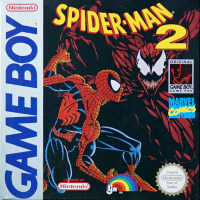
In titles like Spider-Man 2 (1992) and Spider-Man and X-Men in Arcade's Revenge, the Extra Energy item is a crucial pickup that replenishes the hero's health bar. It serves a similar survival function in the platformer Mr. Nutz (1994) and the action game Power Rangers Lightspeed Rescue (2000). These items are typically found hidden within levels or dropped by defeated enemies to aid player progression.
During the 8-bit and 16-bit eras, developers utilized these specific power-ups to balance the notoriously high difficulty curves of licensed action-platformers. In the Game Boy release of
Spider-Man 2, the inclusion of this item mitigated the lack of a password or save feature, allowing players to endure prolonged combat sequences across side-scrolling stages. For
Spider-Man and X-Men in Arcade's Revenge, the item's placement was highly strategic, designed to offset the punishing level design encountered by the various playable Marvel heroes in their respective character-specific stages.
As the industry transitioned toward the late 1990s and early 2000s, the mechanic persisted across different intellectual properties. In the colorful, hazard-filled environments of
Mr. Nutz, the item acted as a vital buffer against precise environmental obstacles and complex boss encounters. By the time of
Power Rangers Lightspeed Rescue, the item adapted to 3D and isometric spaces, sustaining players through multi-stage rescue missions. Across these diverse titles, the item represents a foundational design choice of its era, bridging the gap between arcade-style difficulty and home console accessibility.



 (En,Fr,De,Es,It).png)



.png)