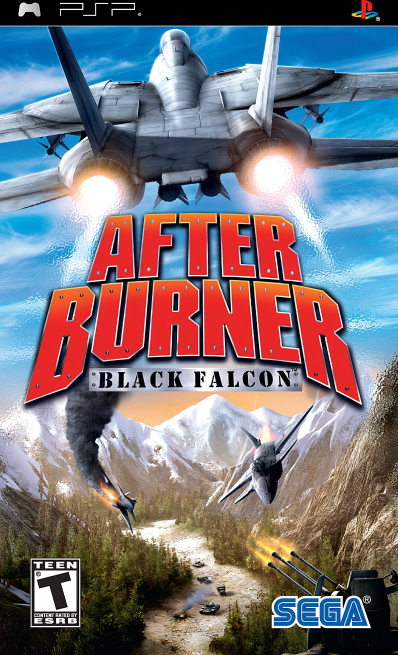
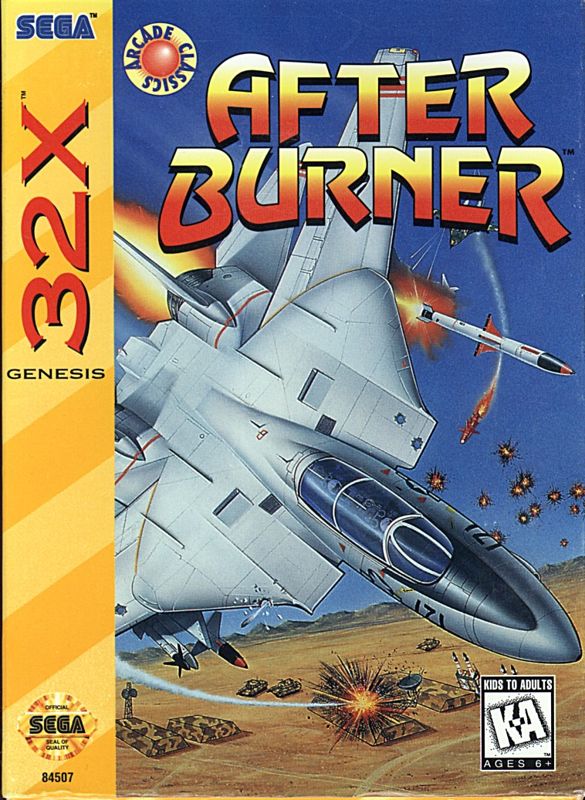
After Burner is a classic combat flight simulation series created by Sega, debuting in arcades in 1987. The series puts players in the cockpit of an F-14 Tomcat fighter jet, tasking them with shooting down enemy aircraft across various stages. Following the success of the 1987 arcade original, the game was ported to numerous home systems in 1988 and 1989, including the Sega Master System, Commodore 64, and ZX Spectrum.
Designed by Yu Suzuki and Sega's AM2 division, the franchise pushed technological boundaries using "Super Scaler" board technology to simulate rapid 3D movement. The original
After Burner (1987) arcade cabinet featured a hydraulic motion simulator that physically tilted and rotated in response to player flight controls, creating an immersive sensory experience. Following this arcade success, Sega licensed the game for extensive home distribution.
The wave of late-1980s conversions brought the experience to diverse home computer and console audiences. Notable releases included
After Burner [+3 Disk] (1988) for the ZX Spectrum +3, alongside standard cassette and disk versions of
After Burner (1988) for platforms like the Amstrad CPC, Atari ST, and Commodore 64. By
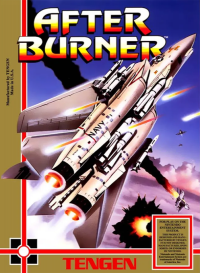
After Burner (1989), the game had reached the Amiga, MS-DOS, and the Nintendo Entertainment System, adapted by third-party publishers like Tengen and Activision.
These ports adapted the intense, fast-paced missile lock-on mechanics and rapid-fire vulcan cannon gameplay to systems with varying graphical capabilities. The franchise's legacy of pseudo-3D scaling and high-speed action influenced future rail shooters and flight action games, establishing a template for Sega's subsequent arcade scaling achievements.
.png)
.png)
.png)









.png)

(Activision)(48-128k).jpg)



.png)

.png)






.png)