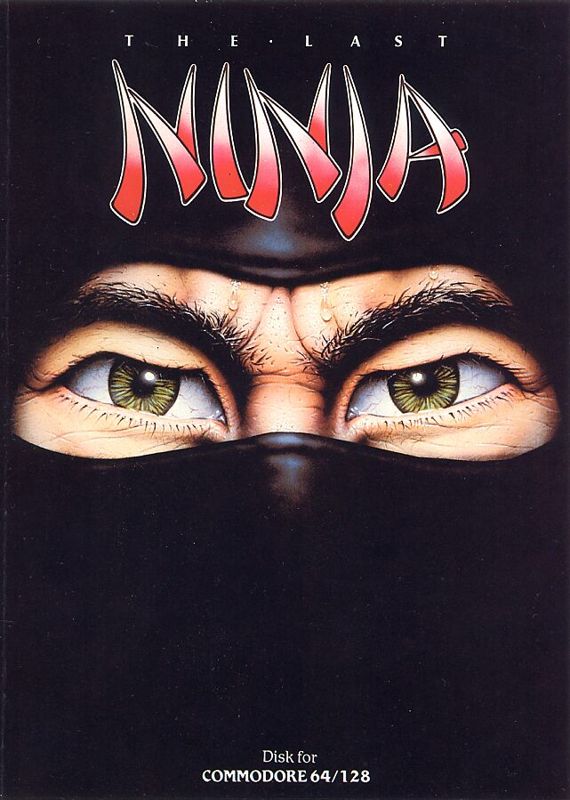
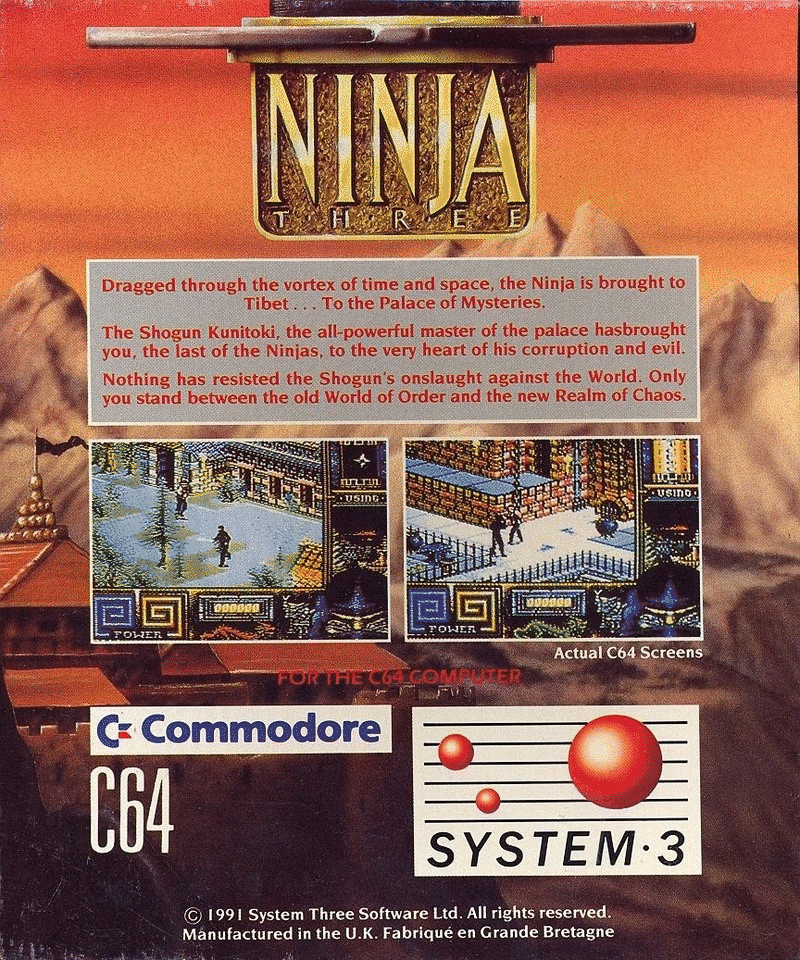
The Last Ninja series follows the journey of Armakuni, the last surviving ninja, as he battles the evil shogun Kunitoki. The franchise is known for its isometric perspective, combining exploration, puzzle-solving, and martial arts combat across titles like Last Ninja (1987), Last Ninja 2: Back With a Vengeance (1988/1990), and Last Ninja 3 (1991). It was highly acclaimed for its graphics and atmospheric soundtrack, particularly on the Commodore 64.
System 3 developed and published the franchise, which became one of the most commercially successful software series on the Commodore 64. The original
Last Ninja (1987) established the engine's multi-screen scrolling mechanics, which were ported to platforms including the ZX Spectrum, Amstrad CPC, Atari ST, and Amiga.
The sequel,
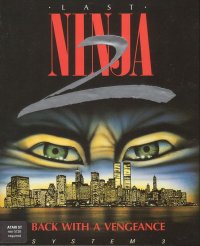
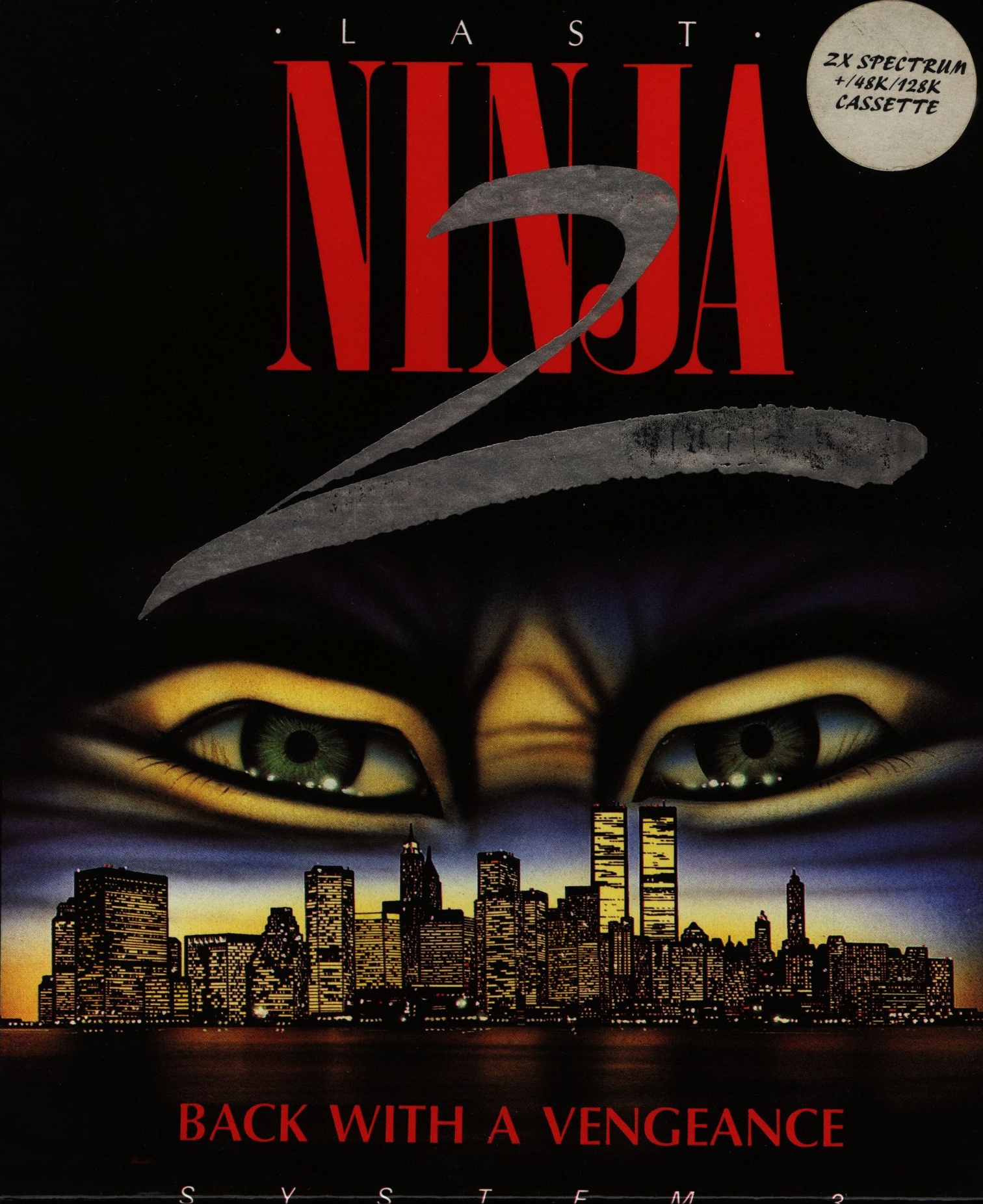
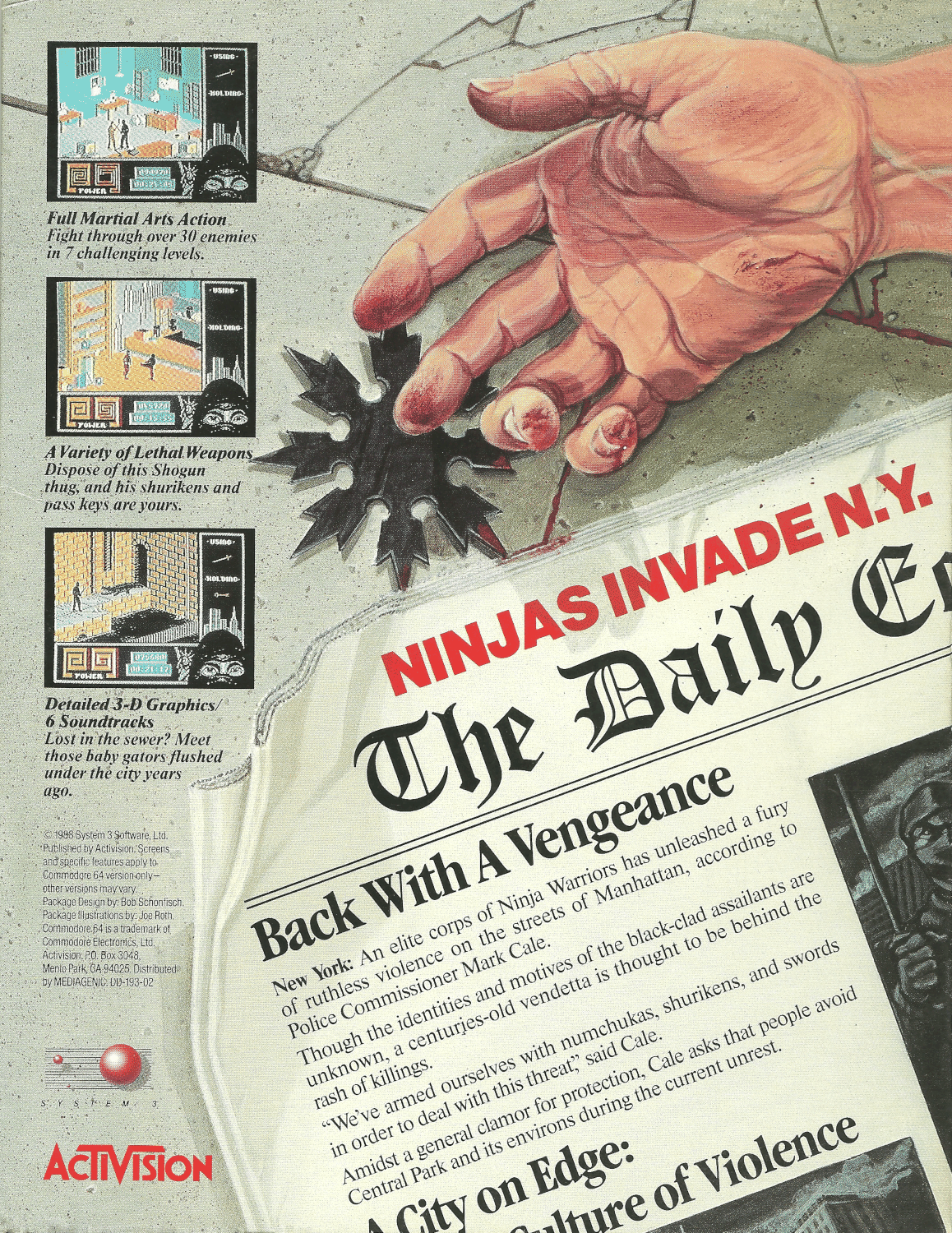
Last Ninja 2 (1988), transitioned the setting from feudal Japan to contemporary New York City. This release saw various iterations, including the highly collectible
Last Ninja 2 [Limited Edition] (1988), which shipped with physical feelies such as a plastic shuriken and a ninja mask. Subsequent ports and budget re-releases followed, including
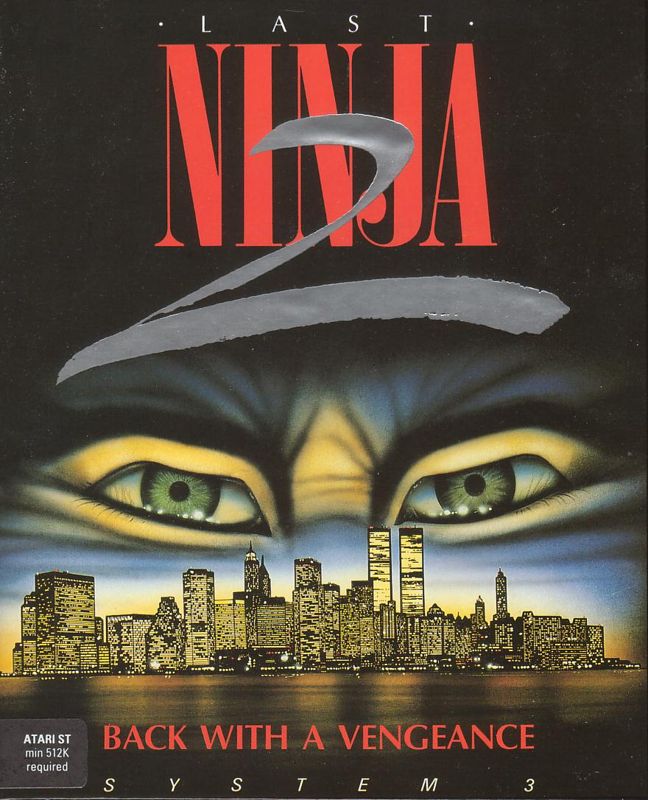
Last Ninja 2 (1989) for 16-bit systems and the repackaged
Last Ninja 2: Back With a Vengeance (1990).
The trilogy concluded with
Last Ninja 3 (1991), which introduced an elemental scroll magic system and refined combat mechanics. The series' audio legacy was shaped by composers Ben Daglish, Anthony Lees, and Matt Gray, whose chiptune scores pushed the SID sound chip to its technical limits. Despite plans for a fourth installment and various 3D remake attempts in the late 1990s and 2000s, the original 8-bit and 16-bit releases remain the definitive entries of the property.






.png)
 (Side A).png)
.png)
 (Side A).png)