The Sesame Street video game series spans multiple decades, featuring educational titles like Sesame Street 123 and Sesame Street: Numbers. These games focus on early childhood development, utilizing popular characters in titles such as Sesame Street: Alphabet Avenue, Sesame Street: Elmo's A-To-Zoo Adventure, and Sesame Street: Cookie's Counting Carnival.
Early entries in the franchise, such as
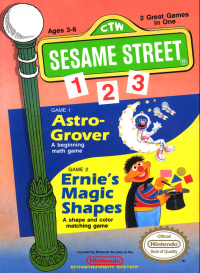
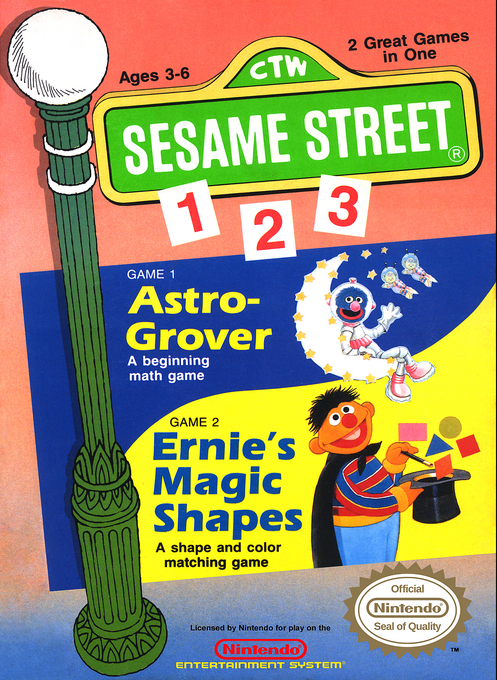
Sesame Street 123 (1989) for the Nintendo Entertainment System, established the brand's approach to interactive learning by translating television-style curriculum into basic digital gameplay. As technology advanced, the series transitioned to CD-ROM platforms, leading to releases like
Sesame Street: Numbers (1994) and
Sesame Street: Alphabet Avenue (1997), which incorporated richer audio, voice acting, and colorful animations to guide young players through foundational literacy and numeracy exercises.
By the Nintendo Wii and DS era, the franchise adapted to motion and touch controls to accommodate toddlers with limited motor skills. This design philosophy guided the development of
Sesame Street: Elmo's A-To-Zoo Adventure (2010) and its specialized
Sesame Street: Elmo's A-To-Zoo Adventure [Stylus Bundle] release, which packaged a child-friendly, oversized stylus to assist with gameplay. Released concurrently,
Sesame Street: Cookie's Counting Carnival (2010) utilized simplified control schemes, such as the Wii Remote's motion sensing, to allow gameplay without complex button inputs. These modern iterations solidified the franchise's legacy of adapting emerging hardware specifically for early childhood accessibility.

.png)



 (En,Es).jpg)

.png)

 (En,Es).jpg)
.png)
.png)
.jpg)
.png)
.jpg)
.jpg)


.jpg)
.png)
.jpg)
 (En,Es).jpg)
.png)
.jpg)
.png)
.png)
 (En,Es).jpg)
.png)