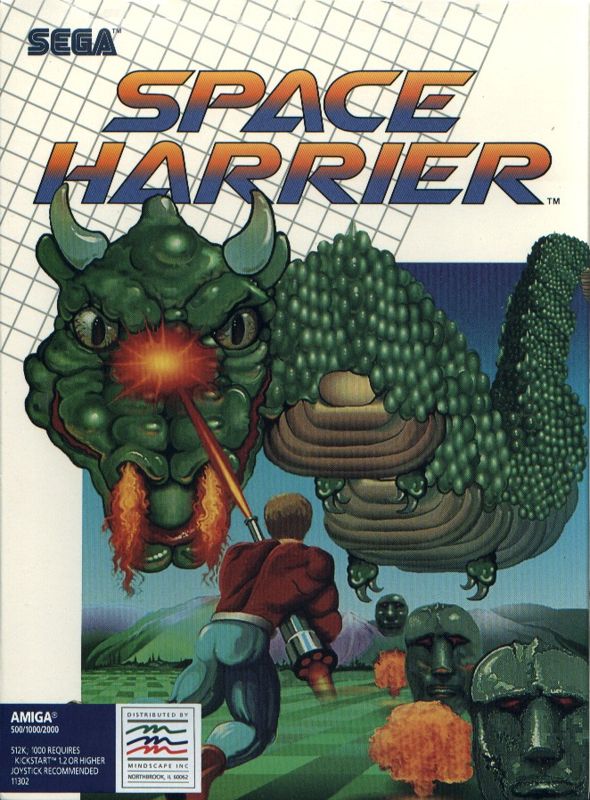
The Space Harrier series began with the landmark 1985 arcade game designed by Yu Suzuki. Following its initial arcade release, the game was ported to numerous home systems between 1985 and 1987, including the Master System, Commodore 64, and ZX Spectrum. Players control a jet-propelled hero navigating surreal, obstacle-filled fantasy landscapes while battling alien creatures.
Sega's pioneering "Super Scaler" technology powered the original
Space Harrier (1985) arcade release, utilizing advanced graphics boards to simulate three-dimensional depth through rapid sprite-scaling. This technical milestone allowed the game to run at a smooth sixty frames per second. The cabinet design also innovated with a deluxe hydraulic motion seat that tilted in response to joystick input.
Following the arcade success, Sega and various third-party developers adapted the experience for home audiences. This wave of releases included
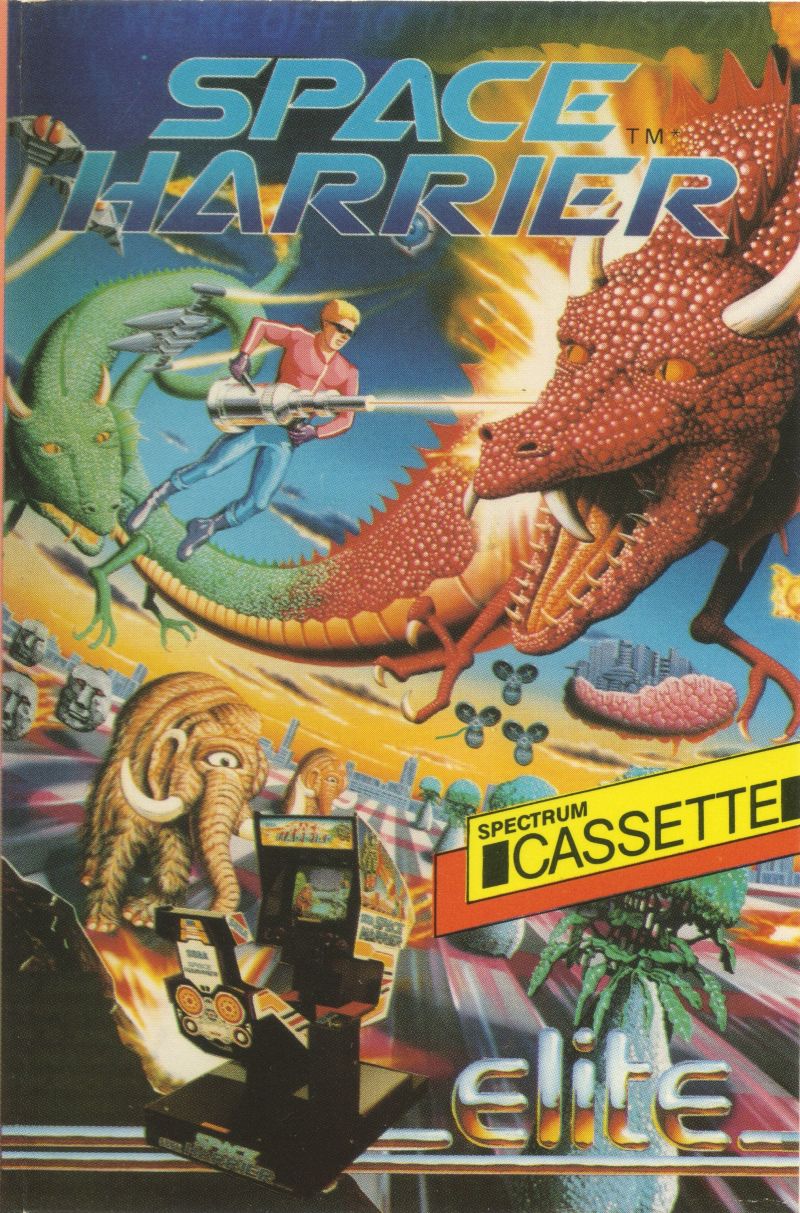
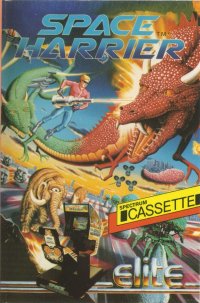
Space Harrier [Cassette Version] (1985) for home computers, followed by a rapid succession of ports. In 1986, multiple distinct versions of
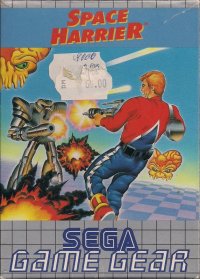
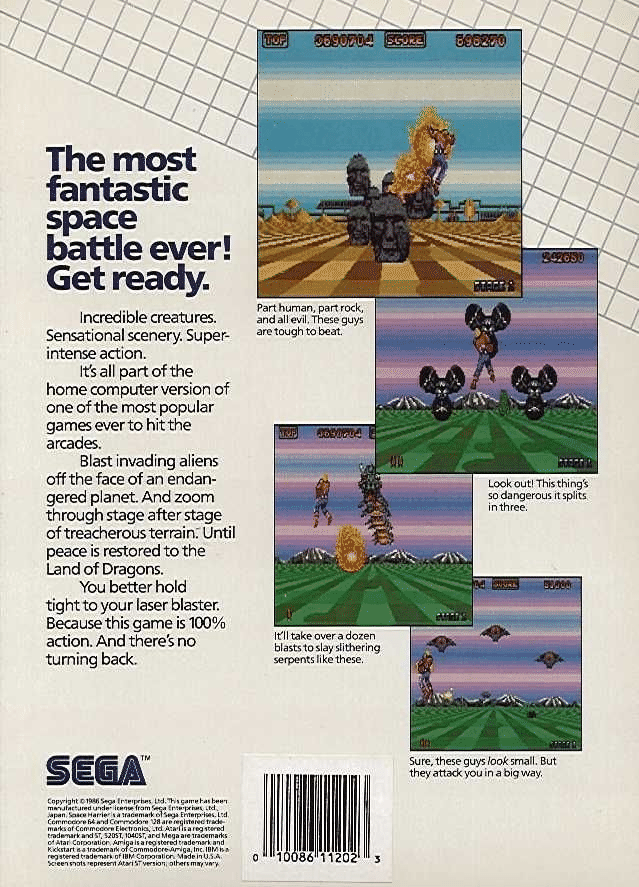
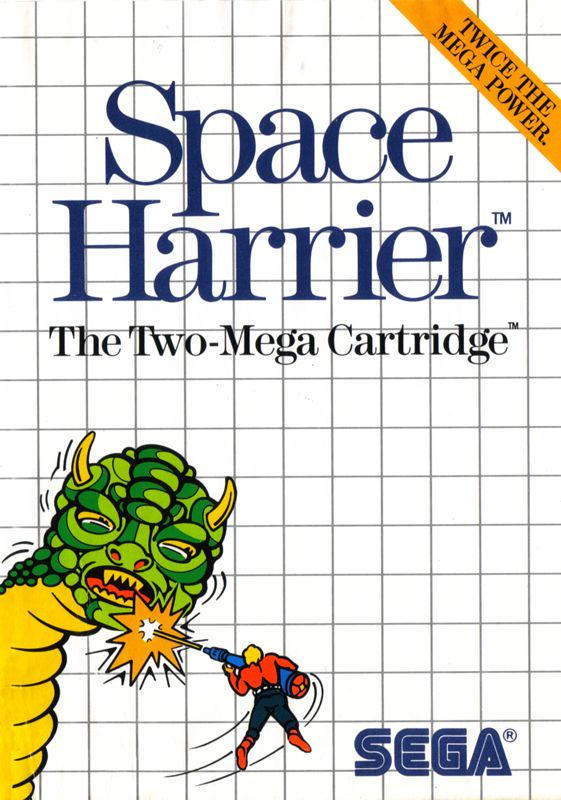
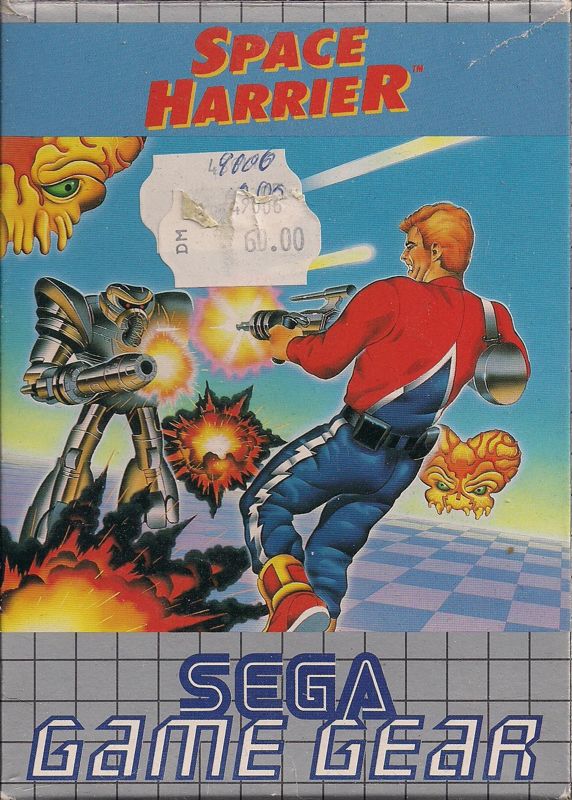
Space Harrier (1986) were published for platforms such as the Sega Master System, ZX Spectrum, Commodore 64, Amstrad CPC, and Atari ST. These versions had to compromise on the arcade's scaling effects, often using raster interrupts or simplified scrolling to mimic the pseudo-3D effect. The conversion effort continued with
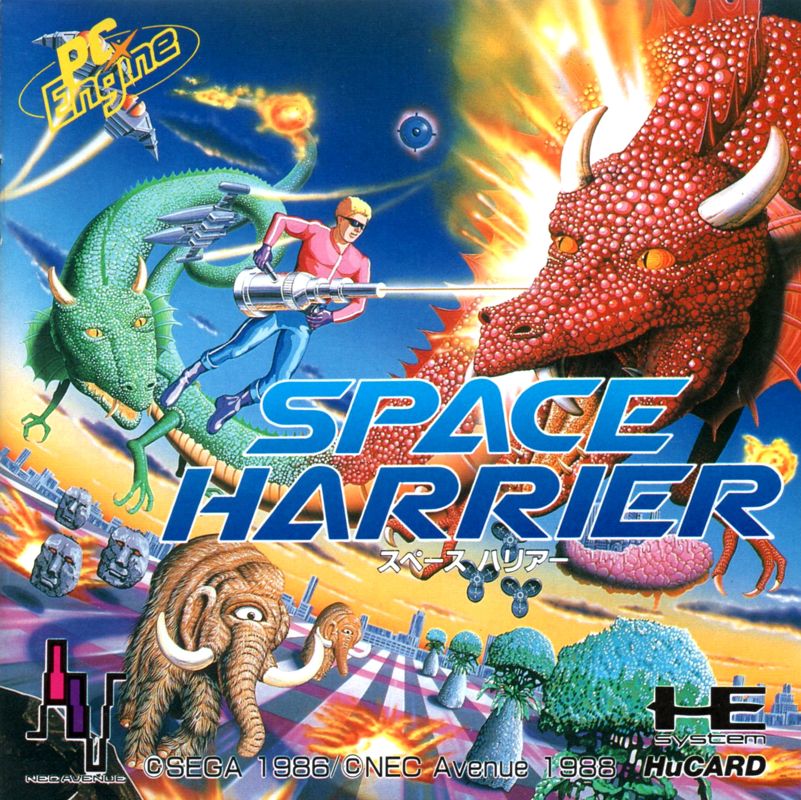
Space Harrier (1987) for the Nintendo Family Computer and PC Engine, cementing the franchise's presence across both 8-bit and 16-bit hardware generations and establishing the "rail shooter" genre.
_1.png)
_1.png)
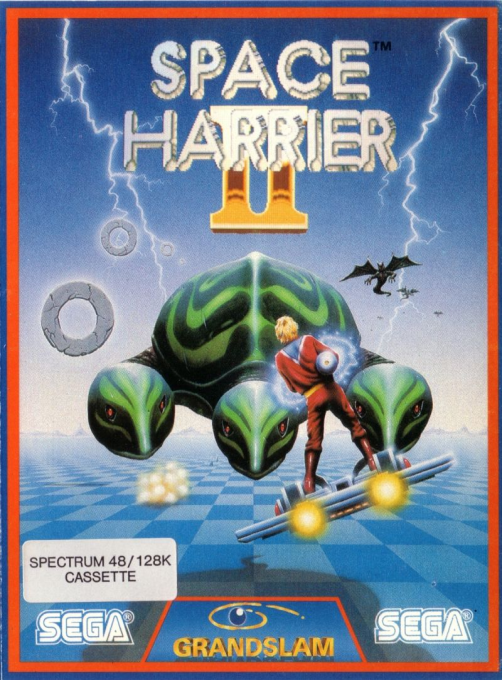
.png)



.png)







.png)
_1.png)

_1.png)
.png)

(Grandslam Entertainments)(Disk 1 of 2)[cr CBS][t CBS].png)



(Elite Systems).png)
.png)
.png)
.png)
(Grandslam Entertainments)(Disk 1 of 2)[cr CBS][t CBS].png)
(Elite Systems).png)
.png)