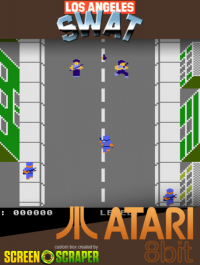
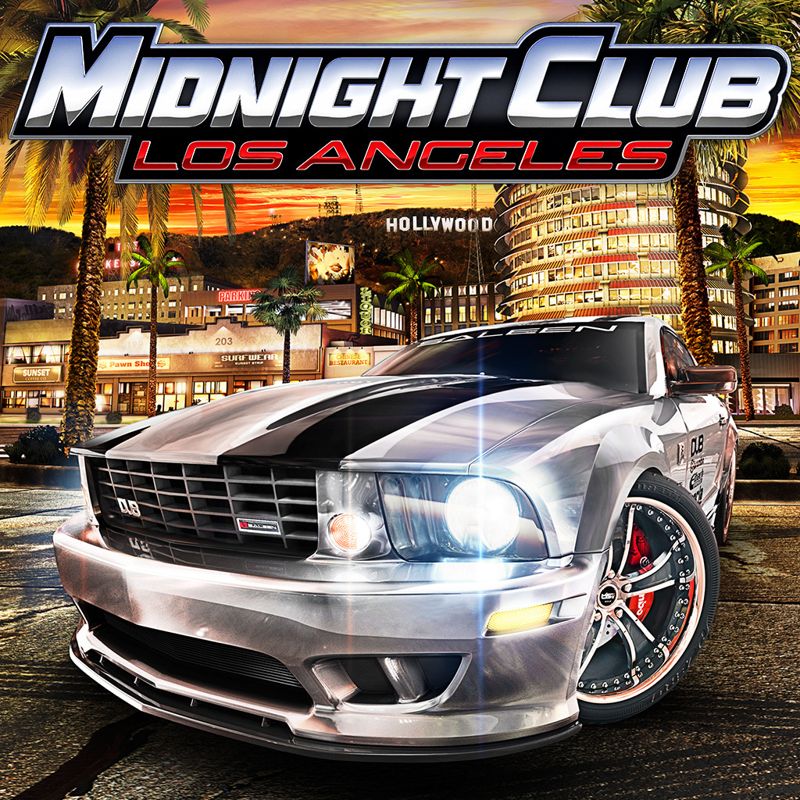
In the Midnight Club franchise, particularly Midnight Club: Los Angeles (2008), the city serves as the open-world environment for street racing. It also appears as a team location in sports titles like Super Batter Up (1992) and Pro Sport Hockey (1994), and as the primary setting in Los Angeles SWAT (1979, 1987).
The depiction of this metropolitan entity evolved from rudimentary, grid-based representations in early tactical games to highly detailed, three-dimensional simulations. In the early arcade and computer titles
Los Angeles SWAT (1979) and its 1987 follow-up
Los Angeles SWAT, the depiction was limited to abstract tactical maps and shooting galleries reflecting the era's hardware constraints. During the 16-bit console era,
Super Batter Up and
Pro Sport Hockey utilized the city's identity to anchor regional sports teams, capturing the competitive landscape of Southern California's athletic market.
The most significant realization of the location occurred in the
Midnight Club franchise. In
Midnight Club: Los Angeles and its various editions, including the
Midnight Club: Los Angeles [Not For Resale] release, developers utilized advanced rendering engines to recreate recognizable landmarks such as the Santa Monica Pier, Sunset Boulevard, and the Hollywood Hills. This iteration introduced a continuous, seamless map design devoid of loading screens, alongside a dynamic weather system and a 24-hour day-night cycle. This technological progression transformed the city from a static backdrop into an interactive, evolving character that defined the gameplay experience.
.png)
.png)
.png)





.png)

.png)

.png)