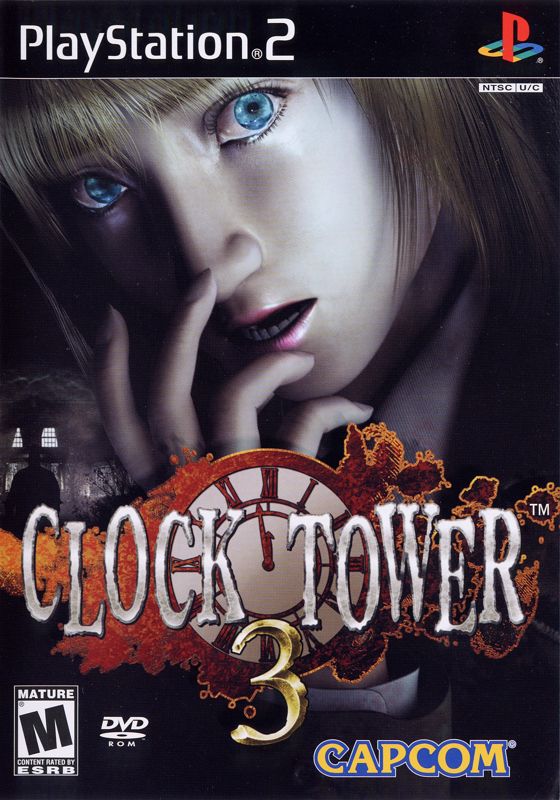
In the dark fantasy game Hexen, Stalkers are stealthy, aquatic enemies that hide beneath swamp waters to ambush players. In the survival horror game Clock Tower 3, Stalkers refer to the murderous, possessed entities that relentlessly pursue the protagonist Alyssa Hamilton. They also appear as hazard or enemy characters in the platformer Pink Panther: Pinkadelic Pursuit.
Within the
Clock Tower franchise and its associated releases, the design of these adversaries reflects a shift in gameplay mechanics from environmental hazards to central narrative drivers. In
Hexen (1997), the creatures leverage the game's id Tech 1 engine, utilizing sprite-based animations to blend into liquid environments, forcing players to rely on audio cues and surface ripples. This mechanical tension evolved significantly by the release of
Clock Tower 3 (2000). Developed under the direction of cinematic figure Kinji Fukasaku, these antagonists received distinct backstories, voice acting, and individualized weapons, transforming them from simple obstacles into psychological threats that define the game's pacing.
By the release of
Pink Panther: Pinkadelic Pursuit (2003), the concept was adapted into a stylized, side-scrolling format. Here, the characters function as caricatured obstacles, requiring precise timing and pattern recognition rather than combat. Across these diverse titles, the implementation of these figures highlights the industry's transition from atmospheric, engine-constrained hazards to fully realized, narrative-driven pursuers.





.png)
.png)