Milton Bradley Co. entered the video game market by developing and publishing titles for platforms like the TI-99/4A and Atari 2600. They produced early home computer games such as Hangman, Hustle, and The Attack, as well as action titles like Survival Run, Spitfire Attack, Bigfoot, and Championship Baseball.
During the early 1980s transition from physical tabletop gaming to digital entertainment, the company adapted its traditional play patterns into interactive software.
Hangman translated the classic pen-and-paper word puzzle into an early educational computer program. To capture the arcade boom,
Hustle introduced grid-based directional gameplay, while
The Attack tasked players with maneuvering a spaceship to eliminate multiplying alien spores before they formed impenetrable barriers.
As home console technology advanced, the developer shifted toward action-oriented simulations.
Survival Run placed players in a first-person maze runner scenario, requiring quick reflexes to navigate hazardous corridors. This first-person perspective was also utilized in
Spitfire Attack, a flight simulator where players piloted a fighter plane to defend airspace against enemy squadrons. For sports and spectacle enthusiasts,
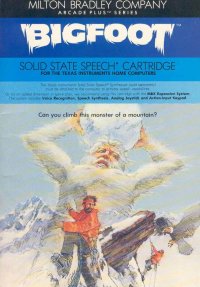
Bigfoot simulated the obstacle-course racing of the famous monster truck, and
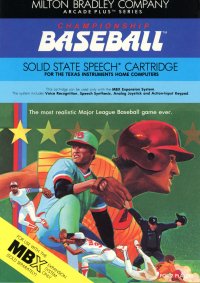
Championship Baseball provided a multi-screen sports simulation featuring pitching, batting, and outfield perspectives. This diverse software lineup demonstrated an ambitious attempt to translate physical play concepts into the digital medium prior to the industry-wide market contraction of 1983.


.png)

.png)