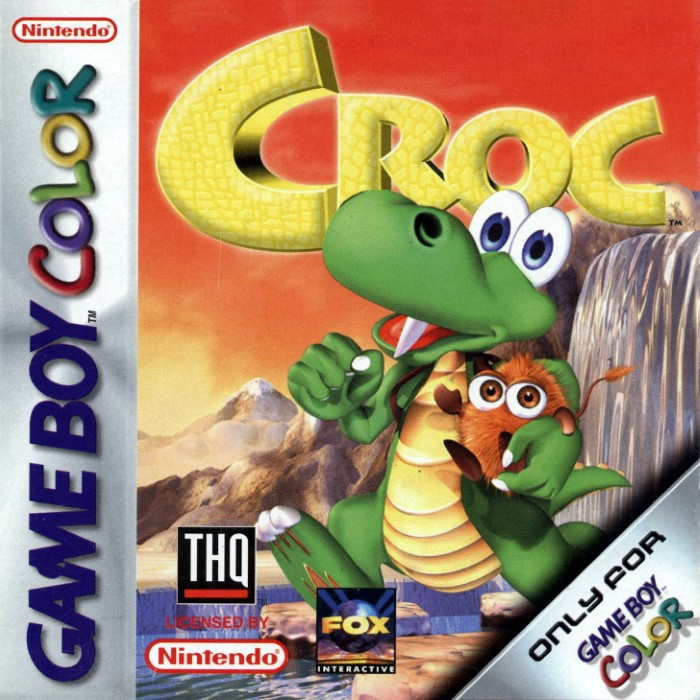
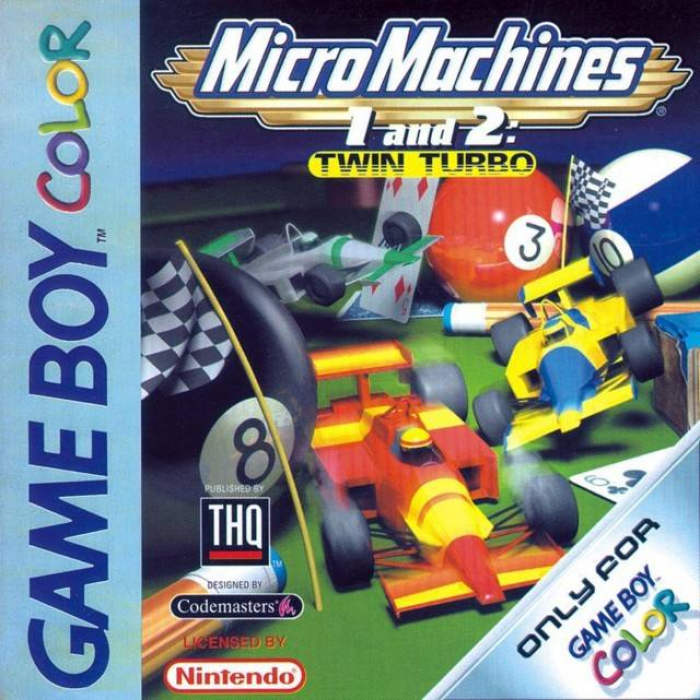
Virtucraft developed several handheld titles, including Game Boy Color ports of Croc and Micro Machines 1 and 2 Twin Turbo. They also developed Game Boy Advance games such as Mortal Kombat Advance, F-14 Tomcat, and Dexter's Laboratory: Deesaster Strikes.
Operating during the transition from 8-bit to 32-bit handheld gaming, the studio specialized in translating established home console and arcade properties into portable formats. Working closely with publishers like Codemasters, Midway, and BAM! Entertainment, the developer focused on squeezing complex gameplay mechanics onto limited hardware.
For the Game Boy Color, the team adapted the sports simulation
Prince Naseem Boxing (2001), capturing the likeness of the British champion. Their work on
Micro Machines 1 and 2 Twin Turbo (2000) condensed the frantic top-down multiplayer racing of the original console titles onto a single cartridge, while
Croc (2000) redesigned the 3D platformer into a 2D side-scrolling format.
On the Game Boy Advance, the studio tackled high-profile intellectual properties.
Dexter's Laboratory: Deesaster Strikes! (2001) utilized an isometric perspective to capture the aesthetic of the Cartoon Network animated series. For
Mortal Kombat Advance (2002), they mapped the complex fighting mechanics of
Ultimate Mortal Kombat 3 onto the handheld's layout. Additionally,
F-14 Tomcat (2001) delivered a cockpit-view military flight simulator, showcasing the studio's technical versatility across diverse genres before its eventual closure.
Virtucraft Ltd.
.png)

 (En,Fr,De,Es,It).png)
.png)
.png)
_1.png)

.png)



_1.png)

.png)

 (En,Fr,De,Es,It).png)
.png)
.png)

.png)
