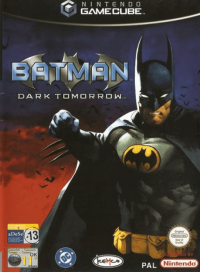
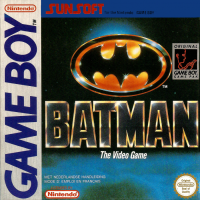
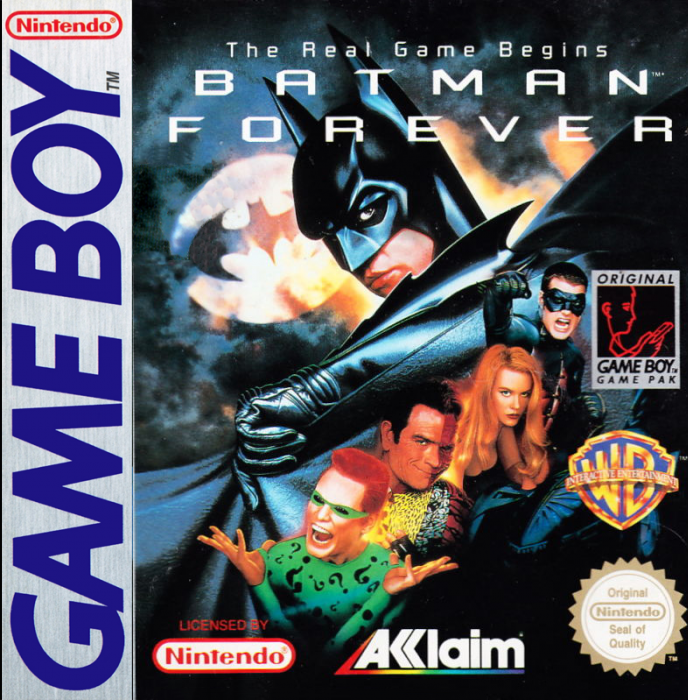
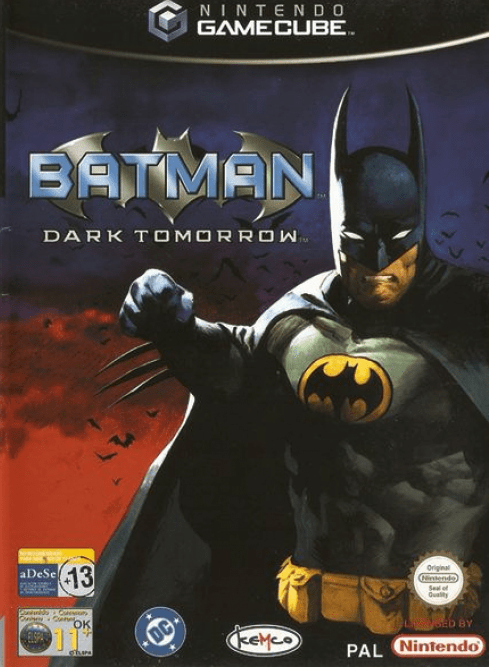
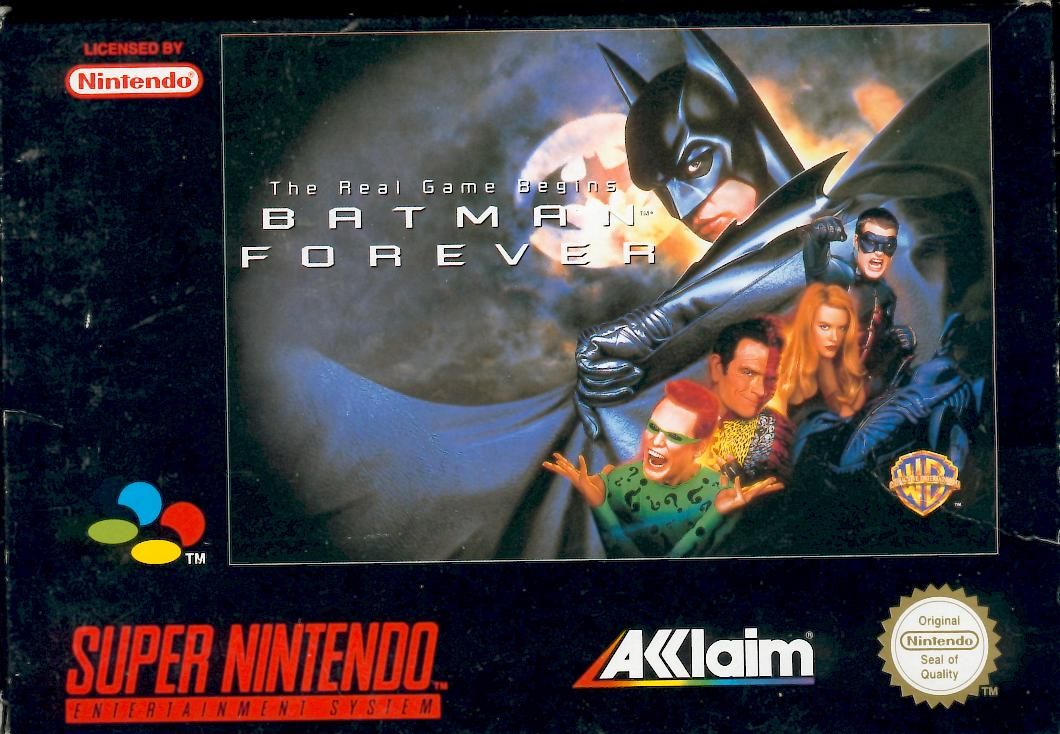
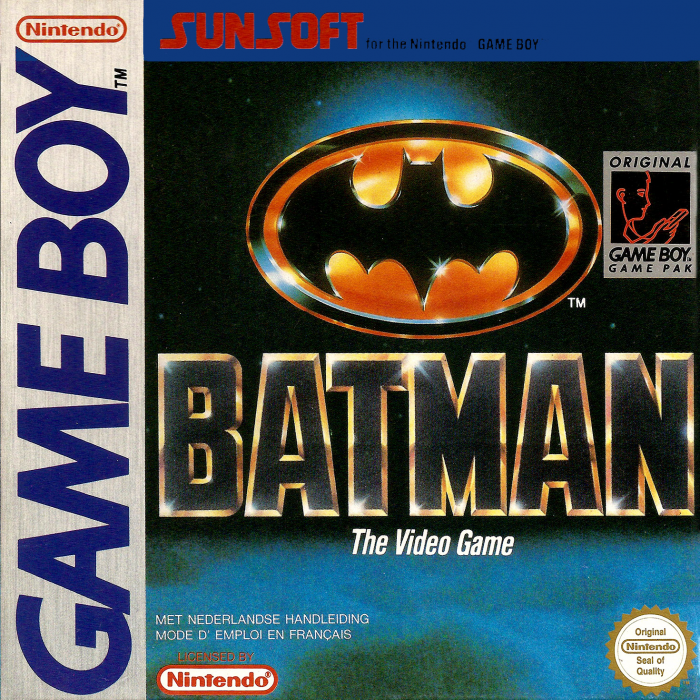
In Batman: The Video Game (1990), the Batarang serves as a limited-use projectile that travels horizontally to strike enemies. The weapon returns in Batman Forever (1995) as a versatile gadget utilized for both combat and puzzle-solving. In Batman: Dark Tomorrow (2003), it is rendered in 3D as a lock-on ranged weapon essential for disarming foes.
The Batarang's transition from comic book lore into interactive media established it as the quintessential tool in Batman's digital arsenal. In Sunsoft's
Batman: The Video Game for the Nintendo Entertainment System, the item cost ammunition pellets to fire, requiring strategic conservation alongside other sub-weapons like the Dirk and Rocket Shot.
By the time of Acclaim's
Batman Forever, adapted for platforms like the Super Nintendo and Sega Genesis, the item's implementation expanded to include upgraded variants, such as the Sonic Batarang, which players selected from a pre-level gadget blueprint screen. This release emphasized the utility belt's role in navigating complex level layouts.
The transition to fully three-dimensional environments in
Batman: Dark Tomorrow on the GameCube and Xbox introduced multiple specialized iterations, including the Remote-Controlled Batarang and the explosive variant. These mechanics laid the groundwork for the targeting systems and environmental interactions that would later define the gadget's role in subsequent generations of superhero action titles.
 (En,Fr,De,Es,It,Nl).png)


 (En,Fr,De,Es,It,Nl).png)