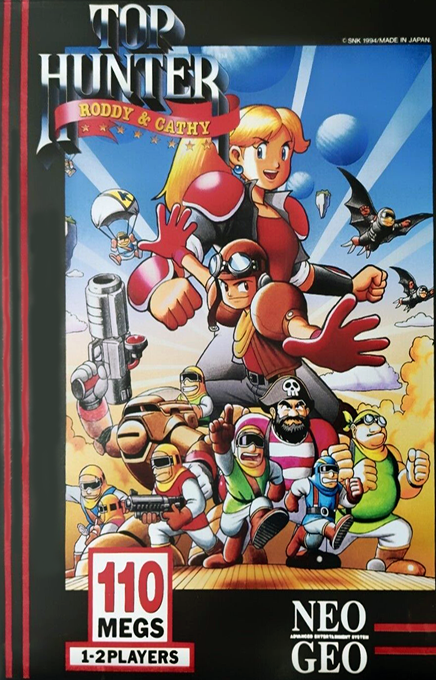
In the Game Boy title Spanky's Quest (1992), power-up items upgrade the protagonist's magic bubbles to defeat enemies. In the Neo Geo arcade game Top Hunter: Roddy & Cathy (1994), these items include health restoratives and specialized weaponry to assist the bounty hunters. For the 2000 Buffy the Vampire Slayer game on Game Boy Color, power-ups provide Buffy with essential combat items and health to fight vampires.
Within the design framework of these hand-held and arcade releases, the distribution and utility of these collectibles dictate player progression and survival strategies. In the puzzle-platforming environment of
Spanky's Quest, players must strategically manage the collection of these objects to navigate vertical stages, where item placement often rewards precise physics-based bubble manipulation.
For the handheld adaptation of
Buffy the Vampire Slayer, the items align closely with the established lore of the television series. Scattered throughout dark, maze-like levels such as Sunnydale High School and subterranean crypts, these collectibles require players to explore off the beaten path. This exploration mechanic emphasizes resource management, forcing players to conserve limited offensive enhancements for encounters with stronger supernatural bosses. Together, these titles demonstrate how item systems evolved from simple arcade score-boosters into narrative-supporting tools within early 1990s and 2000s side-scrolling gameplay.