In titles like Claymates, Eek! The Cat, and Klonoa: Door to Phantomile, switches serve as vital puzzle-solving elements that players must activate to progress. In S.O.S. (1994) and S.O.S: Sink or Swim, they manipulate water flow and environmental hazards to rescue survivors. These devices also appear in action-oriented games like Spawn: The Eternal and Scooby-Doo! Mystery Mayhem to unlock doors and progress through stages.
Within the
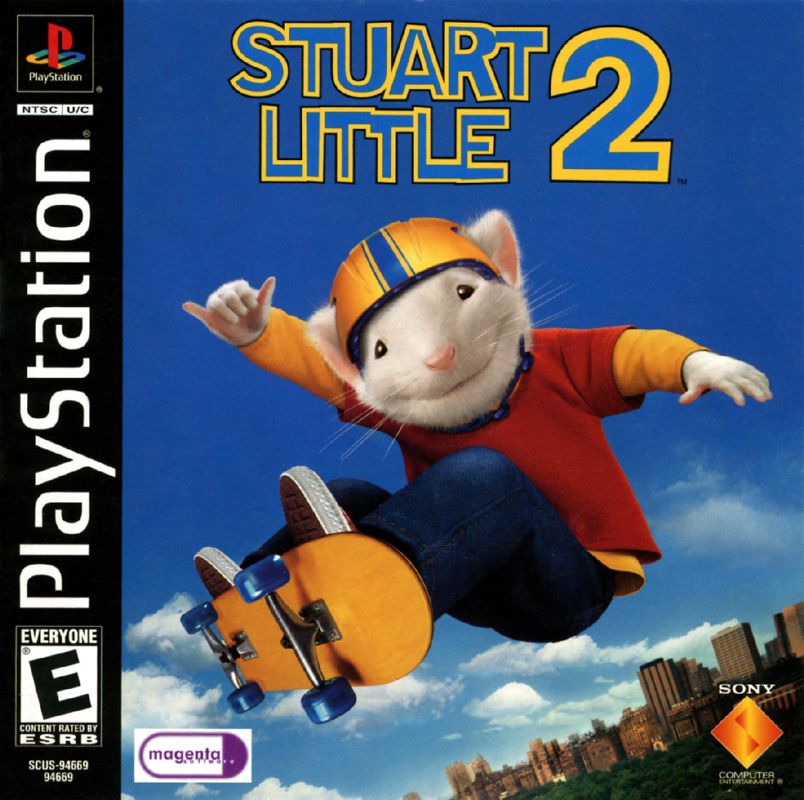
Stuart Little franchise's diverse library of licensed and associated titles, the mechanical design of these interactive devices evolved significantly across console generations. Early 16-bit entries like
Claymates and
Eek! The Cat utilized basic toggle switches to alter physical terrain, requiring precise timing. This concept was expanded in
S.O.S. and its follow-up
S.O.S: Sink or Swim, where players operated valves and levers under strict time limits to alter the layout of sinking vessels.
As the franchise transitioned into the 32-bit era,
Klonoa: Door to Phantomile integrated switches into 2.5D perspective puzzles, forcing players to throw enemies at background targets to trigger them. In
Spawn: The Eternal, the mechanic adapted to fully 3D environments, requiring exploration to locate hidden wall panels. Handheld entries like
Earthworm Jim: Menace 2 the Galaxy integrated switches into vertical maze navigation, requiring players to shoot or physically strike them to open pathways. By the release of
Scooby-Doo! Mystery Mayhem, these mechanisms became standardized progression gates, requiring specific character abilities to operate. This progression highlights how a simple interactive asset became a cornerstone of level design across the franchise's platforming history.
.png)

.png)
.png)

.png)
.png)
.png)
.png)
.png)
.png)


.png)

.png)
.png)
.png)
.png)
.png)
.png)