Spellbound developed the Game Boy Color and Game Boy Advance versions of popular racing games, including TOCA Touring Car Championship and Dukes of Hazzard Racing for Home in 2000. They also worked on handheld entries for the Colin McRae Rally franchise, developing Colin McRae Rally in 2001 and Colin McRae Rally 2.0 in 2002, followed by Starsky & Hutch in 2003.
Operating primarily as a handheld specialist during the turn of the millennium, the studio excelled at translating complex physics engines and realistic driving mechanics from home consoles to restricted portable hardware. For their Codemasters partnerships, this involved condensing the simulation-heavy mechanics of the
Colin McRae Rally franchise into isometric and pseudo-3D perspectives. These portable adaptations of
Colin McRae Rally and
Colin McRae Rally 2.0 were notable for retaining the core rally spirit, featuring digitized co-driver voices, realistic car damage, and varied track surfaces despite the platform limitations.
Similarly, the technical execution of
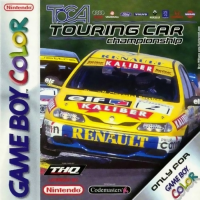
TOCA Touring Car Championship showcased the developer's ability to render multi-car grid racing on an 8-bit system. In adapting licensed properties like
Dukes of Hazzard Racing for Home and
Starsky & Hutch, the studio shifted focus toward mission-based vehicular action, utilizing top-down perspectives and scaling sprites to capture the high-speed chases of the television source material. This run of releases established the company as a reliable technical partner for publishers seeking to extend their flagship racing intellectual properties into the lucrative early-2000s handheld market.
 (En,Fr,De,Es,It).png)
 (En,Fr,De).png)

_1.png)


 (En,Fr,De).png)

_1.png)

 (En,Fr,De,Es,It).png)
