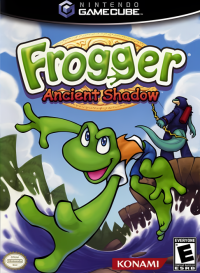
In Pac-Man World and Pac-Man World 2, checkpoints appear as physical signs that activate when touched, saving the player's mid-level progress. Similar progress-saving markers function as checkpoints in other late 1990s and early 2000s titles such as Iron Man X-O Manowar in Heavy Metal, Monkey Magic, Star Wars Episode I: Jedi Power Battles, and Frogger: Ancient Shadow. These items prevent players from having to restart an entire level after losing a life.
Within the
Pac-Man World series, these markers undergo distinct visual designs. In
Pac-Man World, they feature a red and yellow sign displaying the letter "C" that spins and changes color to green upon activation.
Pac-Man World 2 retains this signpost aesthetic, integrating it into the game's diverse environmental themes, from forests to volcanic regions. In
Monkey Magic, the mechanic is represented by stone lanterns that ignite with a spiritual flame when passed.
Star Wars Episode I Jedi Power Battles utilizes glowing blue light pillars, aligning with the sci-fi aesthetic of the franchise.
The implementation of these markers across these specific late-1990s and early-2000s titles reflects an industry shift toward more forgiving level design during the transition to 2.5D and 3D platforming. In
Iron Man X-O Manowar in Heavy Metal, checkpoints are strategically placed before difficult platforming hazards and boss encounters, mitigating the high difficulty of its run-and-gun gameplay. Similarly,
Frogger Ancient Shadow positions them after complex puzzle sequences. This shared mechanic across these titles established a standardized pacing loop, balancing challenging level layouts with player accessibility.








.png)
 (En,Fr,De,Es,It,Pt).png)

.png)

