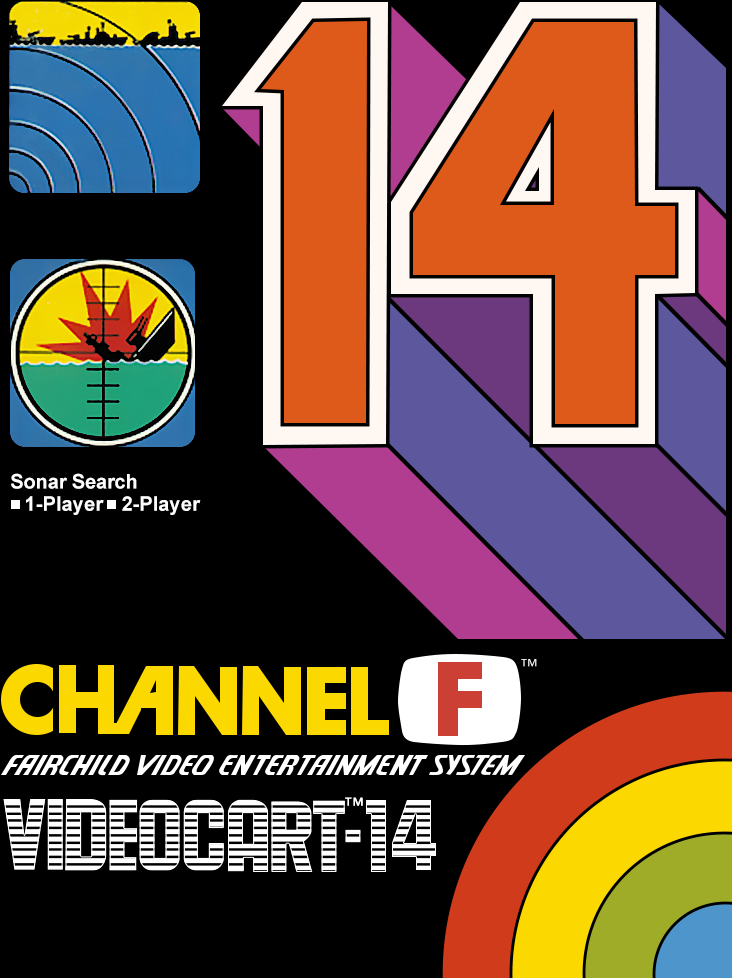
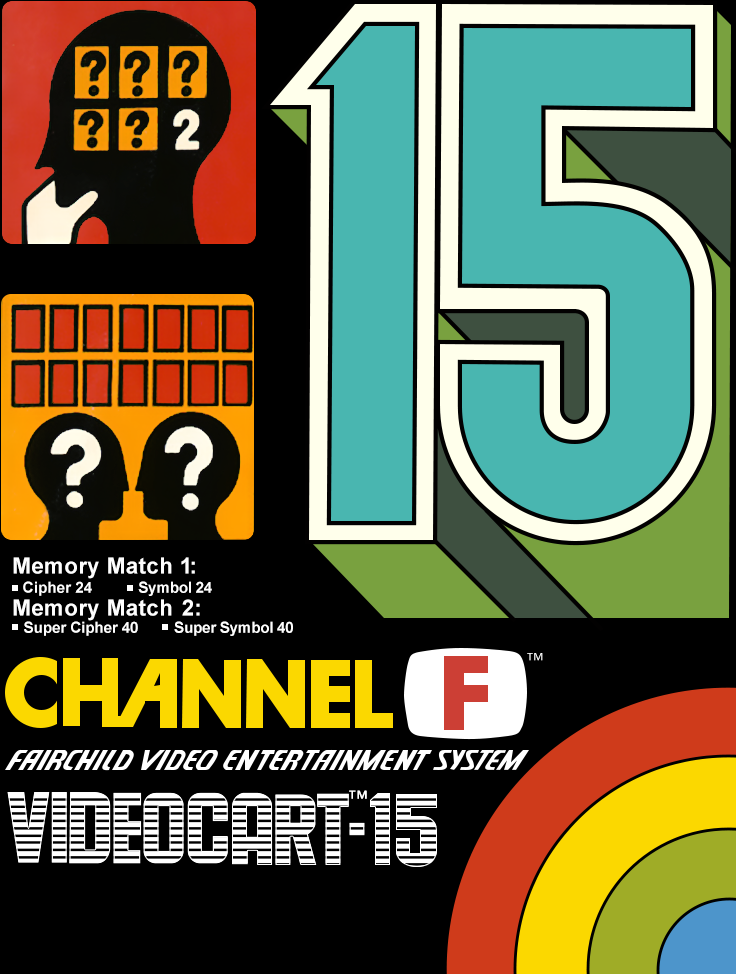
Fairchild published the Videocart series of cartridges for its Channel F system, starting in 1976. These early releases included Videocart-1 (Tic-Tac-Toe/Shooting Gallery), Videocart-2 (Desert Fox), Videocart-3 (Blackjack), Videocart-9 (Drag Strip), Videocart-14 (Sonor), and Videocart-15 (Memory Match), establishing the industry's first cartridge-based console library.
The development of these pioneering releases was led by engineer Jerry Lawson, who utilized Fairchild's F8 microprocessor to read game code directly from the individual cartridges. Prior to the release of
Videocart-1 and
Videocart-2, home video games relied on dedicated, hardwired circuits. By housing the game program on a programmable ROM chip inside the cartridge, Fairchild allowed players to swap physical media to load entirely different software.
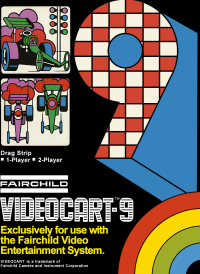
The design of
Videocart-3 and
Videocart-9 demonstrated the versatility of this architecture, moving from card games to simulated racing. These titles utilized the console's unique hand controllers, which featured eight-way movement and rotational twisting, to navigate the digital environments. Later additions like
Videocart-14 and
Videocart-15 expanded the system's capabilities into audio-sensory feedback and memory puzzles. Although Fairchild eventually sold the technology to Zircon International in 1979, the programming paradigms established by this specific software lineup laid the technical foundation for the entire cartridge-based video game industry, directly influencing subsequent systems like the Atari 2600.
Fairchild Camera and Instrument Corp.
_1.png)
_1.jpg)
_1.jpg)
_1.jpg)


_1.png)