The Hero
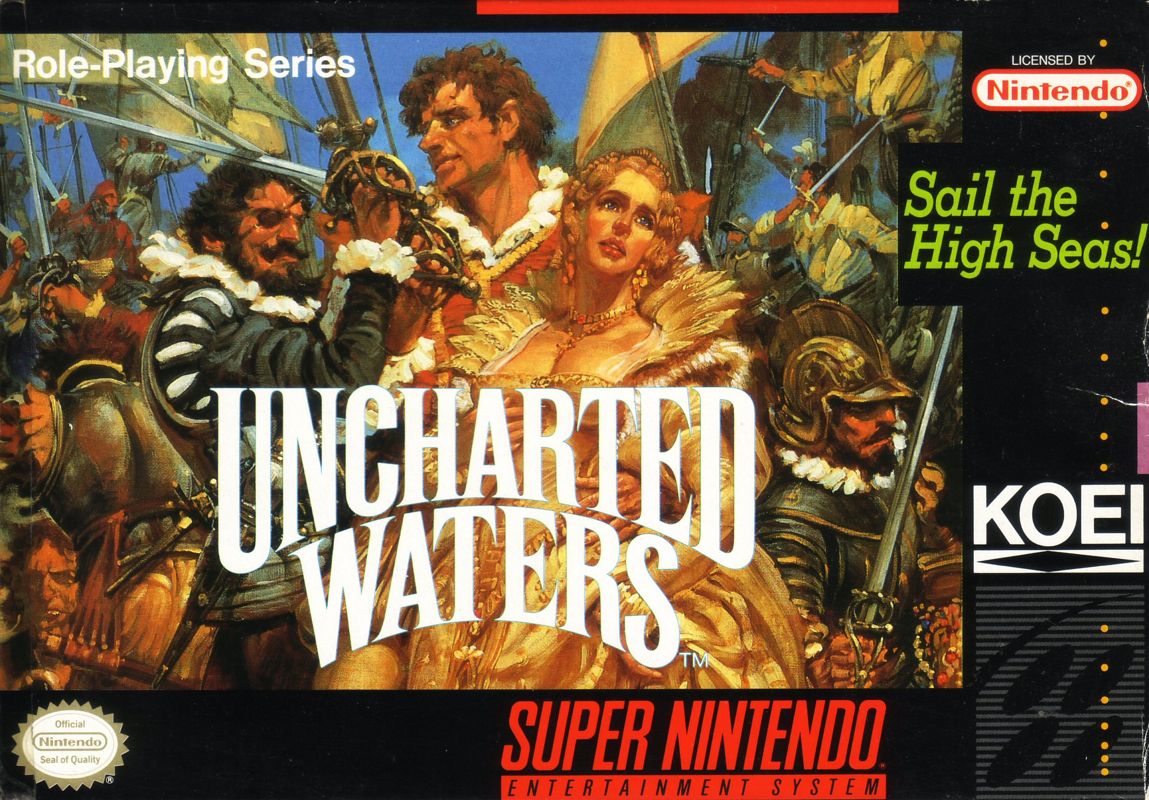
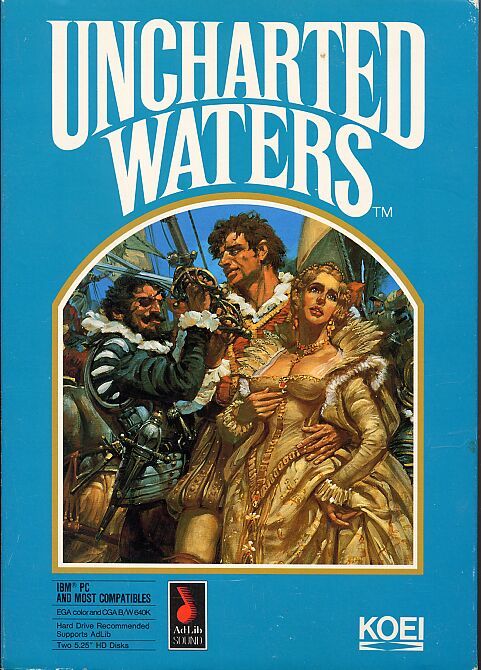
You are the hero of Uncharted Waters. Your home is Lisbon, the capital of Portugal. In 1502, you are 16 years old and ready to set sail in search of fortune and fame.
Princess Christiana
Princess Christiana is the daughter of the King of Portugal. She is 14 years old, and secretly follows your adventures. If you gain the King's respect you may be united one day.
The First Mate
The First Mate sailed with your father, and was the only survivor of his fateful wreck. He holds great faith in your new expedition. Rely on his expertise to guide you through rough seas.
Your Quest
Welcome to 16th century Europe, the age of sea travel and exploration! You enter in a time when adventurers competed to open sea routes to new lands.
You are the last in line of a family which once enjoyed the luxuries of a noble life. Your family has been reduced to poverty ever since the demise of your grandfather. In an attempt to win recognition in the annals of sea-faring history, he went down with his fleet off the coast of Africa. Your father renewed your grandfather's quest, but once again the sea triumphed and he succumbed to the waves.
The previous century saw the successes of three renowned explorers. In 1487, Bartholomeu Dias landed at the southernmost point of Africa and named it the Cape of Good Hope. Five years later Christopher Columbus celebrated his discovery of the New World, in 1492. Finally, in 1498, Vasco da Gama opened a sea route to India!
Now the year is 1502, and the challenge is in your hands. Gain fortune and fame and restore your family name to honor. If you're a true salt, you should complete your journey before 1522.
The Age of Exploration
Until the 15th century, the seas remained a mystery, feared for their endless expanse. There were a brave few, however, who dared to venture into the unknown. Only a handful returned to tell the tales of their adventures, but these explorers brought great enlightenment to the world.
Nations invested great sums of money to fund sailing voyages. By sponsoring exploration, they were also able to procure exotic goods for trade in Europe. In the early days of sea trade, Turkish ships of the Ottoman Empire controlled the sailing routes throughout the Mediterranean Sea. Turkish merchants peddled goods from the Baltic Sea to the Straits of Gibraltar. As trade expanded, Spain and Portugal made great strides in navigating the Atlantic. The Portuguese, in particular, devoted their efforts to the South, where they forged trade routes with Africa.
The greatest obstacle to early exploration was overcome by Prince Henry the Navigator of Portugal (1394-1460). Combining his knowledge of astronomy and geography, Prince Henry devised a way to calculate position according to the movement of celestial bodies. Seafarers no longer had to rely on dead reckoning alone; the stars became their guide. Although he himself never pursued waters beyond Morocco, Prince Henry is still praised for his insight.
Celestial navigation soon came into popular use, and thereafter the sextant was invented. Using this instrument, captains learned how to determine their position in longitude and latitude by measuring angular distances from charted stars. The sextant became a key item in navigation.
Although the prospect of riches was the inspiration behind many adventures, the mystery of Prester John also drew explorers to the sea. According to legend, Prester John ruled 72 Christian states somewhere east of Africa. Many Portuguese and Spanish fleets sailed in search of his kingdom under the auspices of the church.
In 1487, the legend of Prester John inspired Bartholomeu Dias (1450-1500) to begin his own search. In a Latin ship, he embarked from Lisbon and set his course for the coast of Africa. Far out at sea, a violent storm overtook the fleet and swept it off course. Drifting for days without food or water, Dias was ready to give up, when he spotted the coast! He landed and named his find the Storm Cape; it was later renamed the Cape of Good Hope. Dias had discovered the southernmost tip of Africa, the turning point to the East!
In 1492, Christopher Columbus contributed to world navigation by shattering the long-time superstition that the Earth was flat. Inspired by the teachings of astronomer and geographer Toscanelli, Columbus set out to reach India by traveling west. He never reached India, but by finding land in the West he convinced other explorers that the Earth was round! It was not until Amerigo Vespucci (1451-1512) retraced Columbus' route in 1497, that it became clear Columbus had discovered an unexplored continent. Vespucci renamed the land after himself, the "Americas."
In 1497, Vasco da Gama (1469-1524) aimed to surpass Dias' accomplishment of discovering the southern tip of Africa. Da Gama's path took him from Lisbon, around the Cape of Good Hope and then through the Arabian Sea where he safely landed in Calicut. Da Gama had reached India! One year later, he returned to Portugal with Indian spices and dyes as evidence of his achievement. From that time on, da Gama's path became a busy trade route praised for its profitability.
Captains such as Dias, Columbus and da Gama broadened the world for 16th century Europe. In their personal quests for fortune and fame, they navigated paths to distant and legendary lands. Heroes of the sea, these adventurers led mankind into a new age of awareness.
.png)

.png)








 (NDSi Enhanced) [b].jpg)










_1.png)


_1.png)