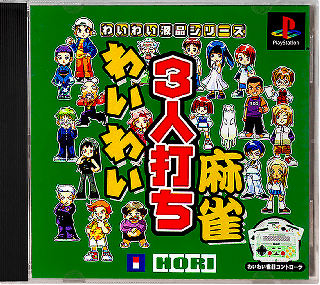
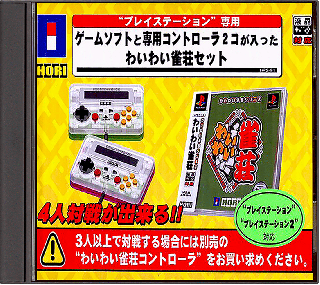
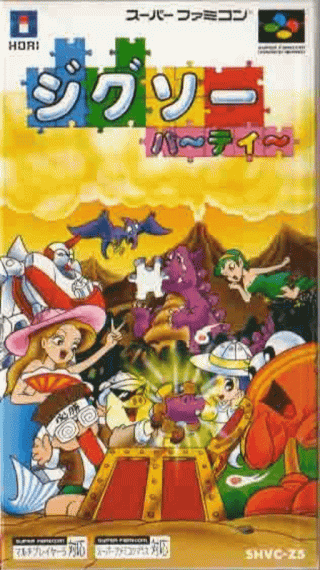
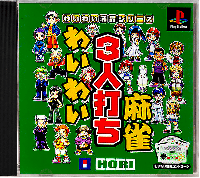
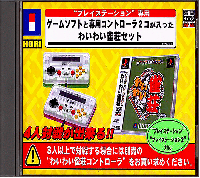
Hori, primarily known as a prominent video game hardware and accessory manufacturer, also acted as a software publisher for select titles. The company published the Super Famicom puzzle game Jigsaw Party in 1994. It later published digital mahjong games for the PlayStation, including Wai Wai Jansou and its companion title Wai Wai 3-nin Uchi Mahjong in 2000.
These software releases served as strategic complements to the company's core peripheral business, often designed to showcase specific controller functionalities.
Jigsaw Party leveraged the Super Famicom's mouse accessory, offering players a digital jigsaw experience with competitive multiplayer modes and time trials. The game featured colorful, anime-style illustrations that players had to assemble under time pressure, establishing a casual, family-friendly appeal.
Six years later, the publisher targeted the mature tabletop market on the PlayStation with its
Wai Wai series.
Wai Wai Jansou provided a traditional four-player mahjong simulation, while
Wai Wai 3-nin Uchi Mahjong catered to fans of the faster-paced three-player variant. Both titles emphasized accessible user interfaces, customizable rulesets, and digital opponents with distinct playstyles. By publishing these niche, genre-specific titles, the company demonstrated how software could directly support the market for specialized input devices, bridging the gap between traditional Japanese parlor games and home console entertainment.