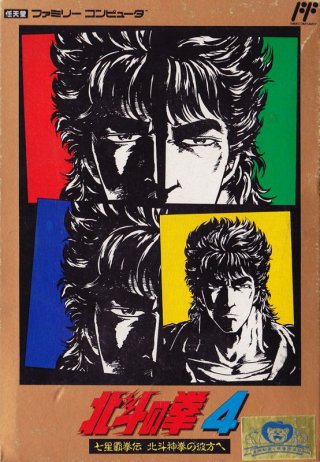
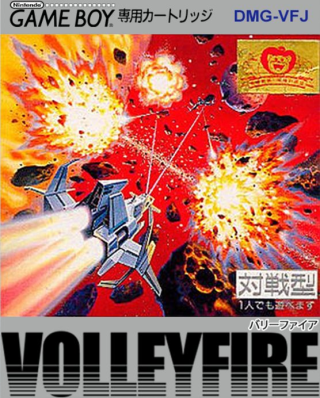
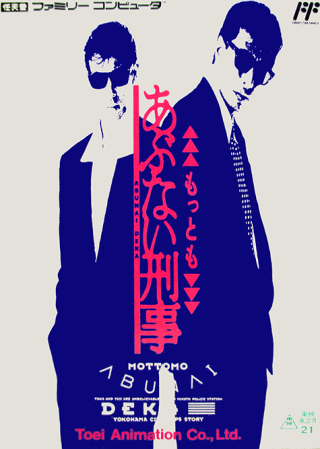
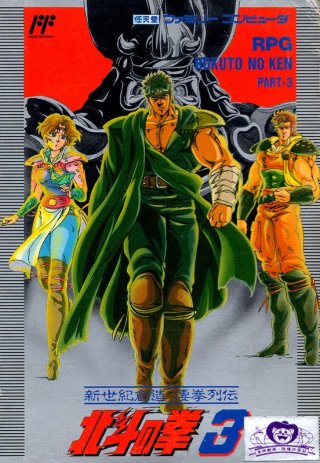
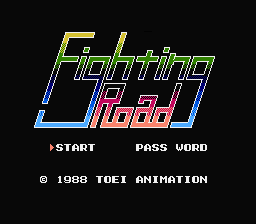
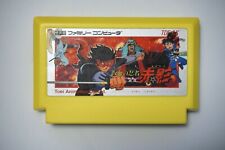
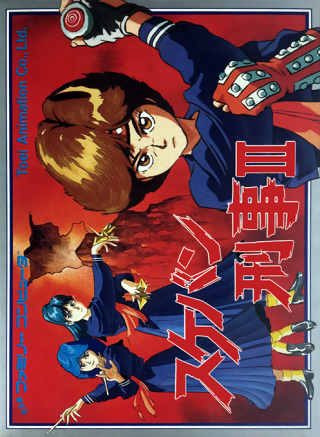
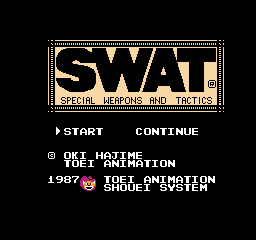
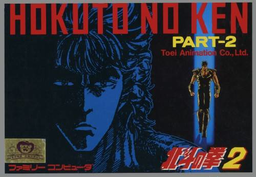
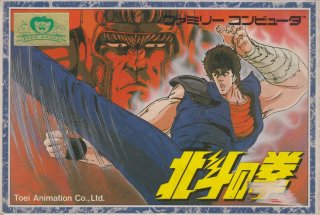
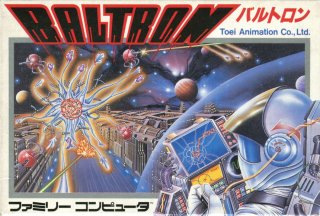
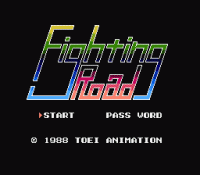
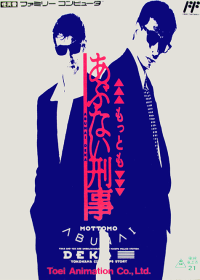
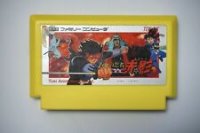
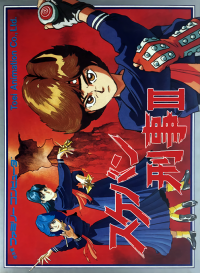
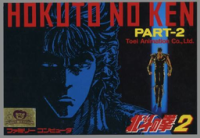
Toei Animation acted as a video game publisher during the 1980s, releasing several titles for the Nintendo Famicom. The company published original games such as Baltron (1986) and Fighting Road (1988), alongside SWAT: Special Weapons and Tactics (1987). They were particularly known for publishing video game adaptations of popular anime and manga franchises, including Sukeban Deka III (1988), Kamen no Ninja Akakage (1988), and multiple entries in the Hokuto no Ken series such as Hokuto no Ken (1986), Hokuto no Ken 2 (1987), and Hokuto no Ken 3 (1989).
Leveraging its extensive catalog of media properties allowed the company to establish a direct pipeline from television screens to the Nintendo Famicom. The
Hokuto no Ken trilogy served as the cornerstone of this publishing venture. Developed primarily by Shouei System, the first
Hokuto no Ken (1986) adapted the martial arts anime into a side-scrolling action game that achieved significant commercial success in Japan. Its sequel,
Hokuto no Ken 2 (1987), continued this action-focused gameplay, while
Hokuto no Ken 3 (1989) shifted the franchise into the role-playing genre to better capture the narrative depth of the manga's later story arcs.
Beyond this flagship franchise, the company experimented with diverse genres.
Baltron (1986) introduced players to a side-scrolling shoot 'em up environment, while
Fighting Road (1988) focused on one-on-one martial arts combat. The tactical action of
SWAT: Special Weapons and Tactics (1987) offered a departure from licensed properties. Meanwhile,
Sukeban Deka III (1988) and
Kamen no Ninja Akakage (1988) translated popular television dramas and anime into action-platformers. This era of direct publishing eventually gave way to a licensing model, where external developers handled future adaptations.