In retro titles like Chuck Rock, Dragon's Lair, and Super Valis IV, the Heart serves as a vital item that restores the player's health meter or grants an extra life. In Chuck Rock, collecting hearts helps Chuck survive prehistoric hazards, while in the SNES version of Dragon's Lair, it sustains Dirk the Daring through dangerous castle traps. The item also appears as a recovery mechanic in other 16-bit era games such as Rocky Rodent and Road Runner's Death Valley Rally.
During the early 1990s, developers utilized this iconic symbol to standardize health mechanics across diverse genres. In Sunsoft's
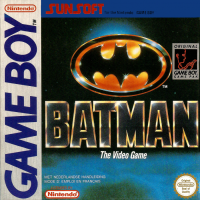
Batman: The Video Game (1990) for the Game Boy, defeated enemies frequently drop hearts to replenish the Dark Knight's health grid, a crucial mechanic for surviving the game's intense platforming stages. Similarly, the puzzle-platformer
Troddlers (1993) incorporates hearts as essential collectibles to safeguard the player's magical builders.
Within the
Beauty and the Beast franchise, particularly the 1993 tie-in games, the heart icon aligns thematic elements of romance with gameplay survival, tracking the protagonist's resilience against castle hazards. The item's integration into the
Super 4-in-1 Multicart (1990) homebrew release demonstrates how independent and unlicensed developers adopted the visual shorthand of the heart to instantly communicate health status to players without requiring textual explanations. Across these diverse releases, the heart functioned as a universal visual language, bridging the gap between licensed cinematic adaptations and original mascot platformers of the 16-bit generation.
.png)
.png)
.png)
_1.png)








.png)
.png)

.png)





.png)

 (Proto).png)
 (Beta).png)





.png)
.png)
.png)
_1.png)
.png)
 (Beta) (1993-07-30).png)




.png)